What Are the 2026 Top Types of Student Leather Shoes?
Choosing the right Student Leather Shoes in 2026 requires more than following a polished trend. Students walk between classrooms, stand during assemblies, climb stairs, and sometimes face wet pavements before the school day begins. Their shoes must manage comfort, durability, appearance, and school requirements without feeling unnecessarily heavy.
This guide examines the leading types expected to matter in 2026, including classic loafers, lace-up Oxfords, practical Derbys, Mary Janes, and supportive leather ankle boots. Each style serves a different student. Loafers offer quick mornings and a clean uniform finish. Derbys provide adjustable support for wider feet. Mary Janes can suit younger students, although their straps need secure buckles and careful stitching. Ankle boots add protection in colder weather, but thick soles may feel restrictive indoors.
Small details matter.
Our comparison focuses on full-grain, corrected-grain, and responsibly sourced leather, while also considering lining, cushioning, heel stability, outsole grip, and repair potential. These points reflect common footwear-testing principles and practical school-wear experience. A good-looking pair can still fail after several weeks if its toe box pinches or its sole separates.
There is no universal winner. Foot shape, climate, walking distance, uniform policy, and maintenance habits change the result. Some 2026 predictions may also age badly; fashion moves faster than a student’s timetable. Therefore, this overview balances emerging styles with proven construction, helping families and schools judge value through evidence rather than attractive photographs alone.
How Student Leather Shoes Are Defined and Classified
What Are the 2026 Top Types of Student Leather Shoes?
Student leather shoes are defined mainly by their upper material, purpose, and construction. A shoe with a leather upper may use full-grain, corrected-grain, or split leather. These grades differ in texture, durability, breathability, and price. Product descriptions should state the material clearly. “Leather finish” does not always mean the entire upper is leather.
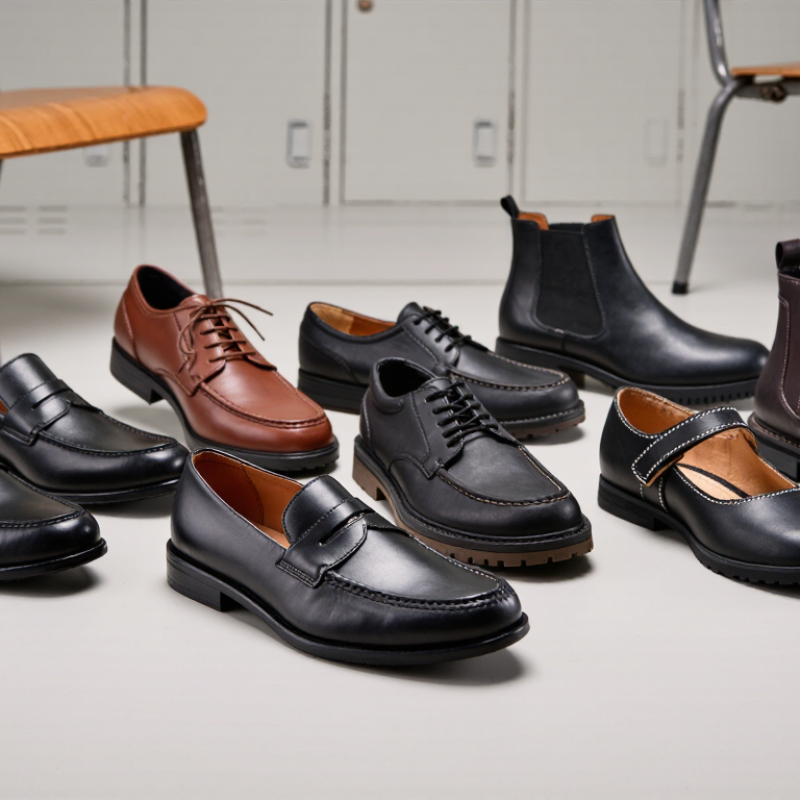
The main student categories include lace-up oxfords, derby shoes, loafers, Mary Jane styles, and simple leather boots. Oxfords usually look neat and formal, while derby shoes offer a roomier fit. Loafers are convenient for quick changes between classes. Mary Jane shoes often suit younger students because their straps improve stability. Boots may provide extra warmth, but they can feel heavy indoors. Fit matters.
Classification also depends on construction. Stitched soles are often repairable, while bonded soles can be lighter and less expensive. Rubber outsoles improve grip on wet paths, and leather linings may reduce moisture buildup. I once judged shoes by appearance alone, then found that stiff counters caused heel rubbing. That mistake changed my fitting routine. I now check toe space, heel movement, stitching, and outsole flexibility before considering style. The categories overlap, and school dress rules can change which type is genuinely practical.
What Are the 2026 Top Types of Student Leather Shoes?
Student leather shoes are commonly defined and classified by their fastening system, lacing structure, and ankle coverage. The chart maps the main construction features of five widely recognized types without using brand or company data.
Oxford shoes use closed lacing, Derby shoes use open lacing, loafers are slip-on styles, monk shoes use buckle fastening, and ankle boots extend above the ankle. A value of 1 means the feature is structurally present; 0 means it is not.
Oxford and Derby Shoes for Formal School Uniforms
For 2026, Oxford and Derby shoes remain leading choices for formal school uniforms. Their plain lines suit blazers, trousers, skirts, and ceremonial events. Oxford shoes use closed lacing, creating a neater and more conservative appearance. Derby shoes use open lacing, giving wider feet easier adjustment. This difference matters during long school days. A stiff upper can cause pressure around the instep. A padded collar and flexible forepart help reduce discomfort.
Practical buying decisions should consider materials, construction, and daily maintenance. The World Footwear Yearbook 2024 reported 23.9 billion pairs of footwear were produced globally in 2023. Asia accounted for about 87% of production, highlighting the importance of consistent manufacturing controls. For school use, full-grain leather usually offers better breathability and aging than heavily coated alternatives. However, leather quality varies. Lower-cost leather may crease quickly or absorb water. That weakness deserves attention. Parents and schools should check stitching, heel stability, outsole grip, and interior smoothness. Independent technical guidance from SATRA also emphasizes fit, slip resistance, flexing performance, and durability in footwear assessment.
A balanced 2026 uniform range could include black Oxford shoes for formal assemblies and polished Derby shoes for everyday wear. Round-toe shapes allow natural movement better than narrow silhouettes. Lightweight rubber outsoles may improve wet-weather traction. Yet excessive softness can reduce support. That trade-off is easy to miss. Proper fitting remains essential, because even well-made shoes cannot correct the wrong length or width.
Mary Jane Shoes and Other Common Styles
What Are the 2026 Top Types of Student Leather Shoes?
Mary Jane shoes are likely to lead student footwear trends in 2026. Their single strap keeps the foot secure during crowded school corridors. A rounded toe also leaves more room for natural movement. Black or dark brown leather works well with uniforms and daily clothing. Small details matter.
Loafers, Oxfords, and Derby shoes should remain practical alternatives. Loafers slip on quickly before early classes. Oxfords offer a sharper appearance for formal school settings. Derby shoes usually provide easier adjustment through their open lacing. Look for stitched soles, flexible uppers, and padded collars. Fit still wins. According to the World Footwear Yearbook 2024, global footwear production reached 23.9 billion pairs in 2023. This enormous market encourages more material choices, but students still need shoes that survive repeated walking.
Statista Market Insights estimated global footwear revenue above 140 billion US dollars in 2024. That figure reflects demand, not guaranteed quality. For leather student shoes, practical testing matters more than polished photographs. Walk across a hard floor before buying. Check whether the heel slips or the strap presses the ankle. Mary Janes can look charming, yet narrow designs may cause discomfort after several hours. My prediction is imperfect. School rules, climate, and personal foot shape can change the ranking. Ankle boots and moccasins may gain attention where colder weather or relaxed dress codes influence daily wear.
What Are the 2026 Top Types of Student Leather Shoes? — Mary Jane Shoes and Other Common Styles | Style | Typical Design | Fastening | Common School Use | Practical Considerations |
| Mary Jane | Low-cut shoe with a rounded or almond-shaped toe and one or more straps across the instep. | Buckle, hook-and-loop strap, or elasticized strap. | Often worn with school uniforms, dresses, skirts, or smart-casual outfits. | The strap helps secure the foot. Check that it does not press across the instep, and allow room at the toes. |
| Oxford | Closed-lacing design in which the eyelet tabs are stitched beneath the vamp. | Laces. | A formal option for uniform requirements and school events. | Laces allow adjustment across the foot. A flexible sole and a comfortable fit matter for extended walking. |
| Derby | Lace-up shoe with open lacing, where the eyelet tabs sit on top of the vamp. | Laces. | A versatile choice for uniform wear and everyday school outfits. | The open-lacing construction can make the fit easier to adjust than a closed-lacing style for some foot shapes. |
| Loafer | Slip-on shoe, often with a low heel and a band or decorative detail across the vamp. | Slip-on; no laces or buckle. | Useful where school dress codes permit slip-on footwear. | Fit is especially important because there is no fastening to tighten. The heel should stay secure while walking. |
| Buckle-Strap Shoe | Low-cut shoe with a strap across the instep, usually with a more structured upper than a casual flat. | Buckle or adjustable strap. | A neat option for uniforms and occasions that call for a polished appearance. | An adjustable strap can help with fit; check that the buckle and strap edges do not rub the skin. |
| Leather Ankle Boot | Boot with an upper that covers the ankle; may have a plain or lightly structured design. | Laces, zipper, or a combination of both. | May suit colder or wet-weather school days when permitted by the dress code. | Look for a secure fastening and a sole with suitable grip. Boots should not restrict ankle movement. |
Styles and school dress codes vary. For growing feet, check fit regularly, leave adequate toe room, and choose a shoe that feels comfortable when walking. Leather uppers may require care suited to their finish; follow the care instructions supplied with the footwear.
How to Compare Comfort, Fit, Durability, and Dress Codes
For 2026, student leather shoes still tend to fall into a few practical styles: lace-up Oxfords, roomier Derbies, and slip-on loafers. The right choice depends less on fashion than on school rules and a full day of walking. Oxfords look neat with formal uniforms, but their closed lacing can feel tight across a broad foot. Derbies usually offer more adjustment. Loafers are quick to put on, though some schools may consider them too casual.
Fit matters more than a polished first impression. Try shoes late in the day, when feet are slightly larger, and wear the socks you plan to use. There should be a little space beyond the longest toe, with no heel slipping during a short walk. Walk on a hard floor. Notice pressure points.
For comfort, check the insole, lining, and sole flexibility; stiff leather may need time to soften, but painful rubbing is not a useful break-in sign. Durability often comes from secure stitching, a firmly attached sole, and leather that bends without cracking. A thicker sole may last longer, yet feel heavy during long school days. Check the dress code for color, shine, and fastening rules before buying. Even careful checks cannot predict every fit perfectly. That part is annoying.