| Floating Wall-Mounted Unit | Wall-fixed cabinet, often with a clear space beneath; may include a shelf or side panels. | Width: 120–240 cm (47–94 in)
Depth: 30–45 cm (12–18 in) | Compact living rooms, apartments, and rooms where visible floor space is important. | Usually includes drawers or hinged compartments. Cable openings can route wires through the cabinet and wall. | Creates an open, uncluttered appearance and makes the floor easier to clean. | Check wall construction, fixing points, and the combined weight of the unit and equipment before installation. |
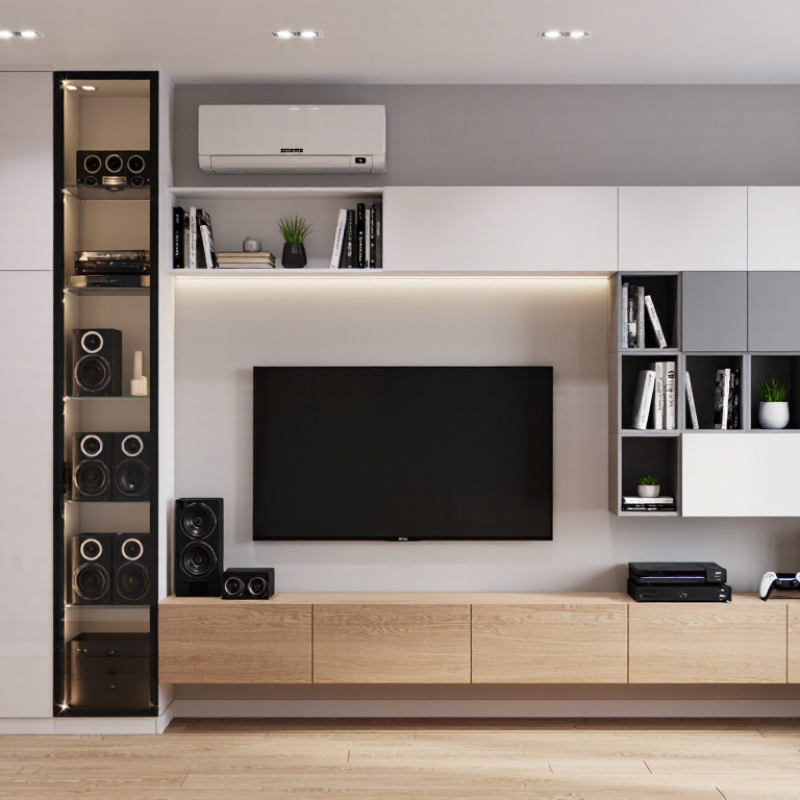
| Full-Wall Media Unit | A coordinated arrangement of a central TV area with upper, lower, and side cabinets or shelves. | Width: 240–400 cm (94–157 in)
Depth: 35–50 cm (14–20 in) | Large living rooms and broad, uninterrupted feature walls. | Offers substantial enclosed and open storage, with room to plan separate cable routes and ventilation. | Combines display, storage, and TV placement in one visually unified composition. | Measure wall width, ceiling height, sockets, and access routes; allow ventilation around electronic equipment. |
| Low TV Console | A low, horizontal cabinet placed on the floor, with the TV mounted above or standing on top. | Width: 120–220 cm (47–87 in)
Depth: 35–50 cm (14–20 in) | Small to medium rooms, rental homes, and layouts that benefit from a simple, flexible arrangement. | Commonly provides drawers, doors, or open equipment bays; rear openings can help manage cables. | Typically straightforward to position and does not require wall mounting. | Choose a width that provides stable support for any TV placed on the cabinet and leaves room for connected devices. |
| Corner TV Unit | A compact cabinet with an angled or corner-oriented top and storage below. | Overall width: 80–150 cm (31–59 in)
Depth: 35–55 cm (14–22 in) | Rooms with limited wall space, open-plan spaces, or layouts where the TV is viewed from multiple directions. | Storage is generally concentrated below the screen; cable access is usually routed toward the nearest outlet. | Makes use of a corner that may otherwise be difficult to furnish. | Confirm screen viewing angles and check that the cabinet does not obstruct doors, windows, or walkways. |
| Modular Media Wall | Separate base cabinets, shelves, and wall units assembled in a configurable layout. | Combined width: 160–360 cm (63–142 in)
Typical depth: 30–50 cm (12–20 in) | Rooms with unusual wall dimensions or buyers who need adjustable storage and display space. | Storage varies by module; individual sections can provide closed storage, open shelves, and equipment spaces. | Can be adapted to different wall widths and reconfigured more easily than a single fixed unit. | Check module dimensions, alignment, load limits, and whether the final arrangement needs wall anchoring. |
| Built-In or Recessed Media Unit | Cabinetry fitted into an alcove or designed to sit flush with surrounding walls. | Made to suit the available opening; cabinet depth commonly starts around 30 cm (12 in). | Rooms with an existing alcove, niche, or planned custom interior fit-out. | Can conceal devices and wiring within dedicated compartments; ventilation openings should be planned where needed. | Uses available wall space efficiently and can create a tailored, integrated appearance. | Requires accurate site measurements and coordination with outlets, wall structure, and any heating or ventilation features. |
| Open-Shelf Media Unit | Wall shelves or a light cabinet arrangement with minimal enclosed storage. | Width: 100–240 cm (39–94 in)
Depth: 20–35 cm (8–14 in) | Small rooms and interiors where a visually light display area is preferred. | Provides accessible space for media devices and décor; cables are more visible unless routed through the wall. | Uses less visual mass and offers easy access to equipment. | Check shelf load ratings and plan cable routing; open layouts require regular dusting and tidy equipment placement. |
| Size note: Dimensions are indicative planning ranges, not fixed standards. Actual sizes vary by design, manufacturer, installation method, and local market. Confirm the TV dimensions, wall construction, equipment clearances, and site measurements before ordering. |