5 Best Snus Display Solutions for Global Buyers?
Choosing Snus Display Solutions for international retail requires more than finding a cabinet that looks polished. Buyers must consider store format, product dimensions, staff access, and the rules that apply in each market. Requirements differ. A fixture suitable for one location may need changes elsewhere.
This guide compares five practical display approaches, from compact countertop units to modular shelving and secure, staff-accessible cases. Each option has trade-offs. Clear product labels, stable construction, easy cleaning, and controlled access can support responsible retail operations. For age-restricted products, buyers should also assess whether the design fits applicable age-verification procedures and local advertising, packaging, and display requirements. Check those rules with qualified local advisers before ordering.
Details matter. A shelf edge that hides a required notice, or a drawer that jams during a busy shift, can cause avoidable problems. Ask suppliers for material specifications, dimensions, installation guidance, and examples of comparable projects. Confirm lead times and replacement-part availability, too. Not every attractive unit performs well in a real shop.
There is no single best solution. A small counter may suit limited space, while a larger store may need adaptable fixtures and clearer stock organization. Some choices will still feel imperfect. That is worth noting. The following options help global buyers compare function, maintenance, and compliance considerations before making a decision.
Countertop Snus Displays for Compact Retail Spaces
Countertop snus displays can make a small retail counter easier to navigate without taking over valuable work space. A narrow footprint leaves room for payment terminals and everyday items. Clear product labels help staff answer questions quickly. Keep the display stable, with a weighted base or non-slip feet. It should not wobble when customers reach for a product. Small details matter.
Choose durable materials that are easy to wipe clean, such as coated metal or smooth acrylic. Rounded edges can reduce snags in busy checkout areas. Adjustable dividers help organize different pack sizes, though too many compartments may make restocking slower. Test the layout with real products before ordering in quantity. A display that looks neat in a photograph may feel cramped on a crowded counter.
Visibility should never replace responsible retail controls. Keep age-restricted products behind staff access where required, and follow local rules for placement, labeling, and sales. A compact design can support orderly handling, but it cannot solve every space problem. Some counters are simply too narrow. Measure the available area, including space for staff movement, and review the setup after daily use. Small changes often reveal what a floor plan misses.
Wall-Mounted Displays for Space-Efficient Merchandising
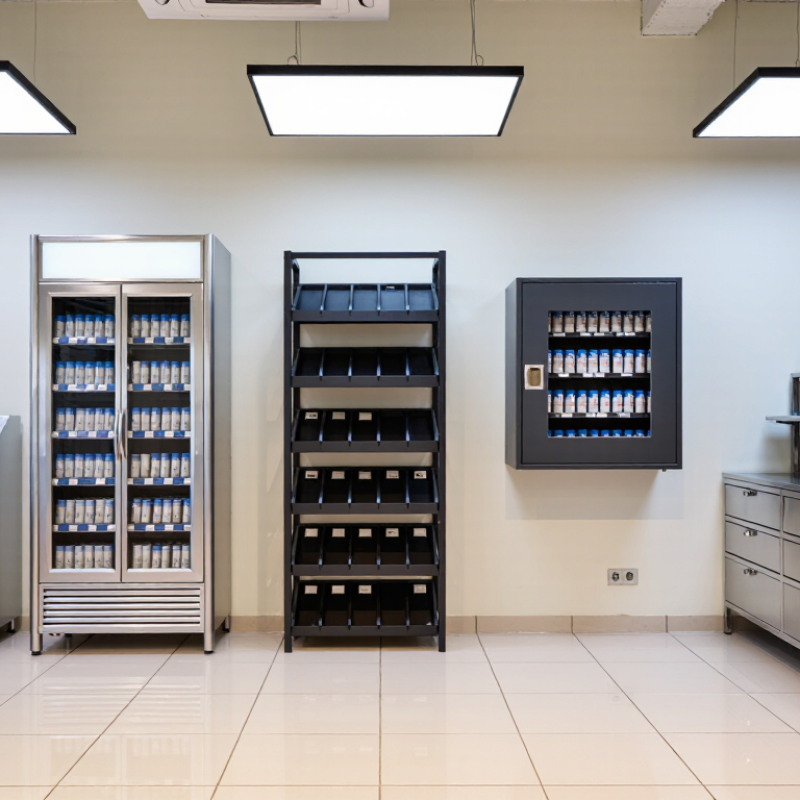
Wall-mounted displays can turn narrow retail walls into organized merchandising zones. For regulated, age-restricted products, five practical formats stand out: slim rail systems, modular shelves, lockable cabinets, pegboard panels, and illuminated display boards. Each option supports different store layouts and security needs.
A slim rail system works well behind a staffed counter. It keeps products visible without using valuable floor space. Modular shelves allow adjustable spacing for different package sizes. Lockable cabinets add control in busy shops, especially where stock access must remain limited. Pegboard panels offer flexible repositioning during seasonal changes. Illuminated boards improve visibility in darker corners, but excessive brightness can create glare.
Measure the wall before choosing a system. Check its load capacity, fixing points, and cleaning access. Displays should keep labels facing forward and key information easy to read. Clear spacing also helps staff complete stock checks faster. Materials should resist scratches and frequent wiping. Powder-coated metal and durable acrylic are practical choices.
Compliance still needs careful review. Display height, product visibility, warning information, and customer access may vary by location. Local rules matter more than a universal template. That part is easy to underestimate. A display can look efficient but still create workflow problems. Test one section with staff before installing the full wall. Observe reach, lighting, replenishment time, and customer movement. Small flaws often appear after installation.
Lockable Displays for Secure Product Presentation
5 Best Snus Display Solutions for Global Buyers?
Lockable Displays for Secure Product Presentation
For global buyers, a lockable display protects products while keeping the retail area organized. It also supports responsible sales of lawful, age-restricted items. A clear acrylic door can improve visibility without allowing casual handling. Tempered glass offers stronger resistance in busy stores. Choose materials that tolerate fingerprints, cleaning chemicals, and daily opening.
A reliable display should include a solid lock, adjustable shelves, and controlled lighting. A key lock suits small stores with limited staff. An electronic lock may provide access records for larger retail teams. Shelves should hold different package sizes without hiding labels or required warnings. Ventilation matters too, especially when warm lighting stays on for long hours. It sounds simple. Details decide performance.
Global buyers should check local rules before ordering. Requirements may affect product visibility, warning placement, access control, and advertising. Ask the supplier for material specifications, lock testing details, installation guidance, and replacement-part availability. Measure the counter carefully, including space for staff movement. A display that looks impressive online may feel cramped in practice. That is an easy mistake to make. Durable construction can raise the purchase price, but frequent repairs create a larger operational burden. Still, no solution fits every market, store format, or security risk. Teams should test one unit before making a wider purchase.