20% off Demo Text

Best Executive Chairs from China for Global Buyers?

Choosing the best Executive Chairs from China requires more than comparing prices or browsing polished product photos. Global buyers must examine comfort, manufacturing consistency, materials, adjustment systems, and after-sales support. A chair may look impressive under showroom lighting, yet feel stiff after six hours at a desk. That difference matters.

Niels Diffrient, the late industrial designer and founder of Humanscale, said, “The chair should fit the person, not the person fit the chair.” His principle remains highly relevant when evaluating Chinese office furniture suppliers. A reliable Executive Chairs manufacturer should explain seat-depth adjustment, lumbar support, armrest movement, foam density, and base strength clearly. Buyers should request samples, factory videos, inspection records, and test reports before placing large orders. Small details reveal expertise. Smooth casters, quiet mechanisms, even stitching, and stable recline resistance often separate professional production from rushed assembly.

China offers broad manufacturing capacity, flexible customization, and competitive export experience. However, quality is not automatic. Some suppliers communicate beautifully but provide inconsistent batches. Others offer excellent frames but weak upholstery or limited warranty service. This is where careful verification becomes essential. Ask about production lead times, replacement parts, packaging protection, and independent quality inspections. The cheapest quotation may create expensive problems later.

There is no perfect buying formula. Human body sizes, working habits, climate, and corporate expectations differ. A dependable supplier should welcome those questions, not avoid them. The strongest global sourcing decision combines expert guidance, physical testing, transparent documentation, and realistic expectations. Comfort must be measured, not merely promised.

Best Executive Chairs from China for Global Buyers?

What Defines an Executive Chair for Global Buyers?

For global buyers, an executive chair means more than a tall back and polished upholstery. It must support long meetings, frequent adjustments, and different body types. EU-OSHA reports that musculoskeletal disorders represent about 60% of work-related health problems in Europe. Seat depth, lumbar height, armrest width, and recline tension therefore deserve careful testing. A chair should let a user place both feet firmly on the floor. The backrest should follow movement without forcing one posture.

Durability also separates executive furniture from decorative seating. BIFMA testing standards examine stability, strength, and repeated-use performance. Ask suppliers for current test reports, load ratings, material specifications, and warranty terms. Grand View Research estimated the global office furniture market at roughly US$63 billion in 2023, showing strong demand but not guaranteed quality. Large market size proves little. I would inspect stitching, cylinder movement, caster noise, and packaging protection before approving a shipment. Small defects become expensive across international orders. Fire performance, chemical documentation, and recyclable packaging may also affect regional acceptance. These details are easy to overlook. I have seen attractive specifications hide vague foam densities and unclear replacement policies. Global buyers should request samples, sit-test them, and compare measurements with their actual users. A chair can look executive and still fail after six months.

Best Executive Chairs from China for Global Buyers? - What Defines an Executive Chair for Global Buyers?
Evaluation Dimension Practical Benchmark for Global Buyers Why It Matters Recommended Verification Method
Ergonomic Seat Height Approx. 400–520 mm
Adjustable seat height should accommodate a broad range of users and allow feet to rest flat on the floor.
Supports neutral leg position and improves compatibility with international desk heights. Check the measured adjustment range, not only the catalogue specification. Verify against the applicable office-chair dimensional standard.
Seat Depth and Width Depth: approx. 420–500 mm
Width: commonly 450–520 mm
A waterfall seat edge and sufficient usable width are preferred.
Helps reduce pressure behind the knees while accommodating different body sizes and clothing styles. Request a dimensioned drawing showing usable seat area, cushion compression, and adjustment positions.
Backrest Support High-back construction with lumbar support, recline adjustment, and a backrest that supports the upper back without restricting shoulder movement. Executive chairs are often used for long meetings, computer work, and decision-making sessions. Review the recline angle, locking positions, lumbar adjustment range, and user testing results.
Recline Mechanism Typical working range: about 90°–135°
Multi-position locking or tension adjustment is preferable to a fixed backrest.
Allows users to alternate between focused work, meetings, reading, and short rest periods. Perform repeated-cycle testing and confirm that the mechanism remains stable at every lock position.
Weight Capacity Common commercial target: 120–150 kg
Higher-capacity versions should state the tested load and test method clearly.
Provides a transparent safety margin for global users and reduces ambiguity in procurement specifications. Request a test report identifying the standard, load rating, cycle count, and failure criteria. Do not rely solely on a marketing claim.
Base and Caster Stability Five-star base with smooth-rolling casters suitable for the intended floor type. Metal or reinforced polymer construction may be used when properly tested. Improves stability, mobility, and resistance to tipping during recline or movement. Verify base dimensions, caster size, floor compatibility, braking behavior, and stability test results.
Gas Lift Safety Use a certified or independently tested gas lift matched to the chair’s maximum rated load and adjustment range. The gas lift is a critical load-bearing component and a key safety concern for international buyers. Request component traceability, applicable safety documentation, and evidence of durability and pressure testing.
Materials and Upholstery Common options include leather, polyurethane-coated upholstery, fabric, mesh, or combinations. Material selection should match the climate and cleaning requirements. Surface durability, breathability, stain resistance, and long-term appearance vary significantly by material. Ask for composition, abrasion results, colorfastness data, hydrolysis resistance where applicable, and care instructions.
Fire and Chemical Compliance Compliance depends on the destination market. Buyers may require documentation for flammability, restricted substances, formaldehyde, or other chemical limits. Regulatory requirements differ by country, contract sector, and public-procurement policy. Define the destination-country requirements before production and obtain laboratory reports for the finished chair, not only individual materials.
Durability and Cycle Testing Commercial seating should be evaluated using a recognized office-chair durability method, with the test level matched to the intended use. Durability testing provides more useful evidence than appearance inspection alone. Request complete reports showing sample identification, test setup, cycle count, load, results, and laboratory details.
Assembly and Packaging Use protective packaging, clear multilingual instructions, labeled hardware, and a design that minimizes assembly errors. Reduces damage, returns, installation time, and after-sales costs in international distribution. Conduct carton drop, vibration, compression, and unpacking evaluations before shipment approval.
Quality Consistency Production should use approved specifications, controlled incoming materials, in-process inspections, and final random inspection. Consistent dimensions, color, stitching, mechanisms, and packaging are essential for repeat orders. Use a signed golden sample, tolerance sheet, inspection checklist, and agreed defect classification.
Customization Capability Useful options may include upholstery color, logo-free private-label packaging, armrest type, caster selection, plug-free mechanical components, and carton artwork. Enables distributors and contract buyers to align the chair with local preferences and project specifications. Confirm minimum order quantities, tooling charges, lead times, sample approval procedures, and change-control requirements.
Warranty and Spare Parts Provide a clearly defined warranty with exclusions, claim procedures, replacement-part availability, and service response targets. Reliable after-sales support can be as important as the initial chair price for global buyers. Review the written warranty, spare-parts list, replacement mechanism policy, and expected support period.
Total Landed Cost Evaluate product price together with packaging, inspection, freight, duties, taxes, warehousing, assembly, warranty exposure, and expected service life. The lowest unit price may not deliver the lowest ownership cost. Compare suppliers using the same specification, delivery term, destination, quantity, and quality requirements.
Buyer guidance: The benchmarks above are practical screening ranges rather than universal legal requirements. Final specifications should be confirmed against the destination market, intended user population, applicable office-furniture standards, and independent test results.

Key Types of Executive Chairs Made in China

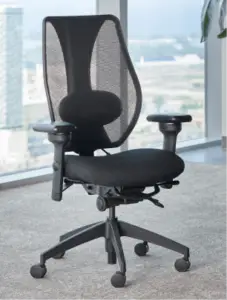
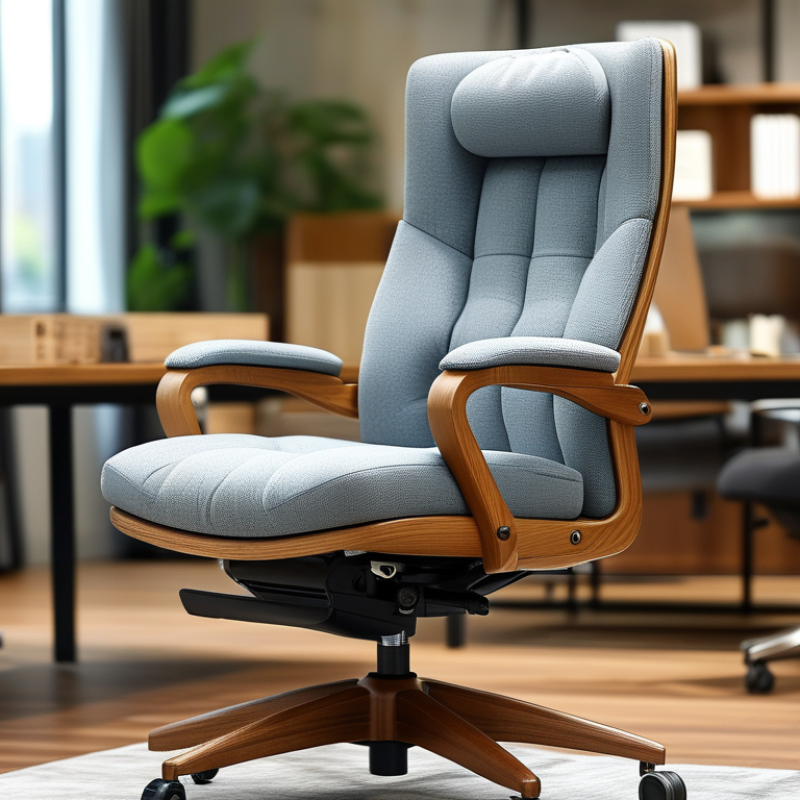
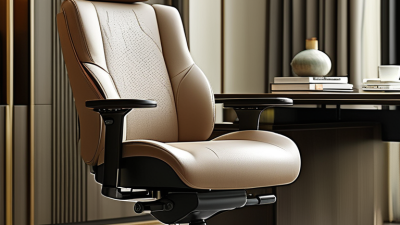
Executive chairs made in China cover several practical categories for global buyers. High-back leather chairs create a formal appearance in private offices. They often include padded armrests, reclining mechanisms, and polished metal bases. Mesh executive chairs offer better airflow in warm working environments. Their flexible backrests can reduce pressure during long meetings. Ergonomic executive chairs add adjustable lumbar support, seat depth, headrests, and synchronized tilting systems. These features suit managers who spend many hours at a desk. Conference executive chairs usually have cleaner shapes and firmer cushions. They support a consistent look around large meeting tables. Some models add wood details or stitched upholstery. That choice is not always better.

During product inspections, buyers should examine the mechanism, stitching, foam density, and base stability. A polished sample can hide production weaknesses. Request load-testing records and material specifications before placing a large order. Check whether the chair fits local desk heights and user preferences. A reliable manufacturer should provide clear assembly instructions, packaging details, and quality-control records. Ask for samples before approving bulk production. Sit in the chair for at least thirty minutes. Short tests can mislead. I have seen attractive chairs develop armrest looseness after repeated use. Buyers also sometimes overvalue appearance and ignore replacement parts. Confirm the availability of casters, gas lifts, armrests, and control mechanisms. Export packaging deserves attention too, because crushed corners can damage upholstery during transit. A small weakness may become an expensive global problem.

Materials, Ergonomics, and Quality Standards

Best Executive Chairs from China for Global Buyers?

Materials, Ergonomics, and Quality Standards

Executive chairs should feel substantial without becoming rigid. A steel or reinforced aluminum frame supports longevity, while molded foam preserves shape better than soft, low-density padding. Breathable mesh can reduce heat buildup, but its tension may weaken without proper testing. Upholstery also matters. High-quality fabric should resist abrasion, staining, and color fading during daily use.

Ergonomics deserves more attention than appearance. The World Health Organization reports that musculoskeletal conditions affect about 1.71 billion people worldwide. Adjustable seat depth, lumbar support, armrests, and recline tension can reduce prolonged pressure. ISO 9241-5 provides guidance for adjustable workstation design. Buyers should request dimensional test results, not rely on attractive product photographs. Small details matter.

Quality verification should include ANSI/BIFMA X5.1 or EN 1335 testing, depending on the target market. These standards examine stability, strength, durability, and component performance. Ask for independent laboratory reports, production samples, material declarations, and batch traceability. A supplier should explain its inspection process clearly. Vague answers are warning signs.

No chair is perfect. I would still test the adjustment controls personally before approving a large order. A polished finish cannot compensate for uneven recline resistance or noisy casters. Global buyers should compare comfort feedback after several weeks, not only after a five-minute showroom trial.

How to Evaluate Chinese Executive Chair Manufacturers

For global buyers, evaluating Chinese executive chair manufacturers requires more than polished showrooms. China remains one of the world’s major office-furniture production bases, according to CSIL’s World Office Furniture industry analysis. Yet scale does not guarantee consistent quality. Request factory records, production capacity, export experience, and traceable component lists. Ask whether each chair has passed relevant performance tests, including ANSI/BIFMA X5.1 or equivalent international standards. Test the actual production sample, not only a display model.

Ergonomics deserves measurable attention. ISO 9241-5 addresses workstation posture, seating dimensions, and user adjustment. Check seat-height range, lumbar movement, armrest adjustment, tilt control, and five-star base strength. A heavy chair can still feel unstable. A soft cushion can still create pressure after six hours. Independent laboratory reports should identify test methods, sample numbers, and dates. Vague certificates are warning signs.

Production control matters more than impressive specifications. Review incoming-material inspections, stitching tolerances, foam density records, and pre-shipment inspection procedures. Request failure-rate data from recent batches, even if the figures look uncomfortable. Honest factories usually explain defects and corrective actions. I would also order a small pilot batch before committing to container volume. This costs more initially, but it exposes packaging damage, color variation, loose mechanisms, and assembly problems. Price alone is a poor filter.

Importing, Customization, and After-Sales Support

Best Executive Chairs from China for Global Buyers?

Importing an executive chair requires more than comparing factory prices. In my sourcing experience, buyers should request a complete sample before placing a large order. Check the recline mechanism, stitching, armrest movement, caster noise, and cushion recovery after eight hours. A stable chair should feel controlled, not merely heavy. Ask for product dimensions, carton size, net weight, gross weight, and loading quantities. These details affect freight costs and warehouse planning. Confirm the shipping term, payment schedule, production lead time, and inspection process in writing.

Customization can include leather or fabric, foam firmness, frame color, logo placement, and packaging design. Provide drawings with millimeter-level measurements. A small change in seat depth can alter comfort for taller users. Request a pre-production sample and photographs of hidden joints. Also check materials against the destination market’s safety requirements. Test reports should match the final materials, not an older version. That mistake is easy to miss.

After-sales support often decides whether a purchase remains profitable. Require a spare-parts list, installation instructions, warranty coverage, and a clear response timeline. Useful parts include gas lifts, casters, arm pads, control handles, and screws. Ask how damaged cartons are documented at arrival. Photos, videos, and batch numbers can speed up claims. A supplier offering only vague promises deserves caution. I once underestimated replacement-part costs, and the savings disappeared quickly. Support quality is difficult to measure before problems appear. Get it in writing.

Best Executive Chairs from China for Global Buyers

Typical planning ranges for importing, customization, and after-sales support. Actual timing depends on order quantity, specifications, port pair, shipping conditions, and supplier policies.

The ranges are practical, non-brand procurement benchmarks for initial planning. Buyers should confirm lead times, shipping schedules, spare-parts availability, and warranty terms in the purchase contract.