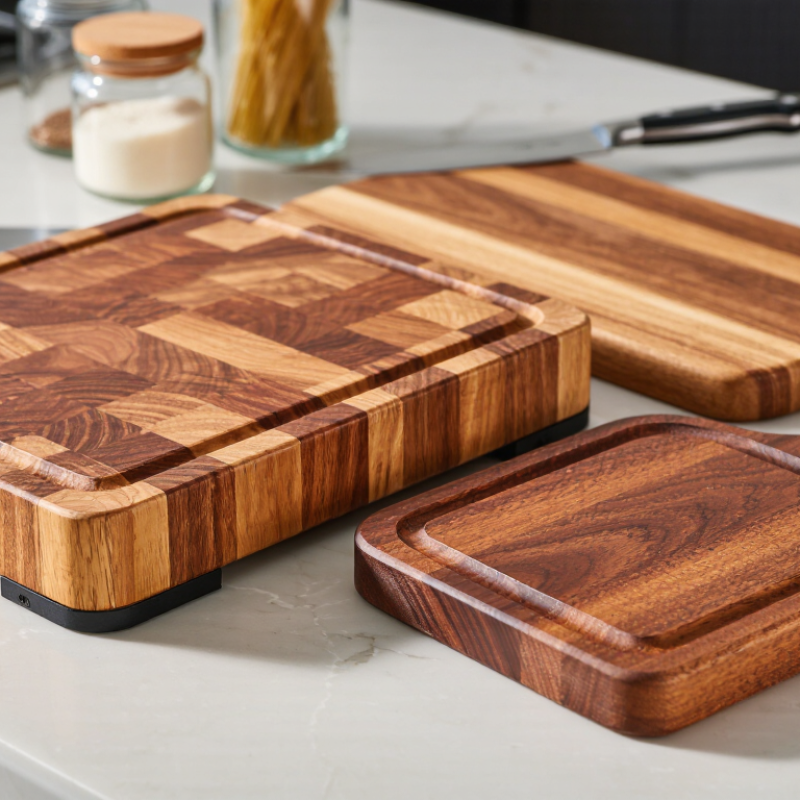
| Large raw-protein board | 18 × 12 in
(46 × 30 cm) | 216 sq in
(1,394 cm²) | 1–1.25 in
(2.5–3.2 cm) | Breaking down poultry, trimming meat, or portioning fish before cooking. | Keep raw meat, poultry, and seafood tasks separate from ready-to-eat foods. | Choose a stable board with enough room to keep raw juices away from the counter edge. Use only if it fits securely in the sink or dishwasher-free cleaning area. |
| Medium produce board | 15 × 10 in
(38 × 25 cm) | 150 sq in
(968 cm²) | 0.75–1 in
(1.9–2.5 cm) | Daily chopping of vegetables, herbs, fruit, and ingredients for cooked dishes. | Provides a dedicated surface for produce and other foods that may be eaten without further cooking. | A medium board balances workspace and storage. Keep it visibly or physically distinct from the raw-protein board. |
| Small ready-to-eat board | 12 × 8 in
(30 × 20 cm) | 96 sq in
(619 cm²) | 0.5–0.75 in
(1.3–1.9 cm) | Slicing cooked meat, cheese, bread, garnishes, or fruit for serving. | Reduces the chance that cooked or ready-to-eat food contacts a surface used for raw ingredients. | Useful for small kitchens and final plating. Do not use it for raw meat unless it is thoroughly cleaned and sanitized afterward. |
| Bread and pastry board | 16 × 10 in
(41 × 25 cm) | 160 sq in
(1,032 cm²) | 0.75–1 in
(1.9–2.5 cm) | Slicing loaves, rolls, pastries, and dry baked goods. | Keeps crumbs and flour away from raw-protein preparation and helps protect ready-to-eat foods. | A grooved design can collect crumbs, but deep grooves are harder to clean. Use a smooth, food-contact-safe surface for easier maintenance. |
| Compact prep board | 12 × 9 in
(30 × 23 cm) | 108 sq in
(697 cm²) | 0.5–0.75 in
(1.3–1.9 cm) | Quick preparation of one or two ingredients, especially in apartments or small kitchens. | Can be assigned to produce or ready-to-eat foods so the larger boards remain available for main tasks. | Select non-slip feet or a damp towel under the board. A board that moves during cutting is less safe, regardless of material. |
| Carving and serving board | 18 × 14 in
(46 × 36 cm) | 252 sq in
(1,626 cm²) | 1–1.5 in
(2.5–3.8 cm) | Resting and slicing cooked roasts, poultry, or large vegetables after cooking. | Supports separation between cooked food and the board used for raw preparation. | A perimeter groove may collect meat juices. Wash the board before using it for another food category. |
| Flexible-use spare board | 14 × 10 in
(36 × 25 cm) | 140 sq in
(903 cm²) | 0.5–0.75 in
(1.3–1.9 cm) | Backup preparation during batch cooking or when the primary board is being washed. | Allows a clean board to be used while another board is reserved for raw ingredients or awaiting cleaning. | Assign the board to one food category at a time. Avoid switching roles mid-preparation without washing, rinsing, and sanitizing. |
| Small household starter set | 12 × 8 in
15 × 10 in
18 × 12 in | 96–216 sq in
(619–1,394 cm²) | 0.5–1.25 in
(1.3–3.2 cm) | A practical three-board sequence for small households and everyday meal preparation. | Assign one board to raw proteins, one to produce, and one to cooked or ready-to-eat foods. | This arrangement follows the principle of separating raw animal foods from foods that will not receive additional cooking. |