Solid bamboo
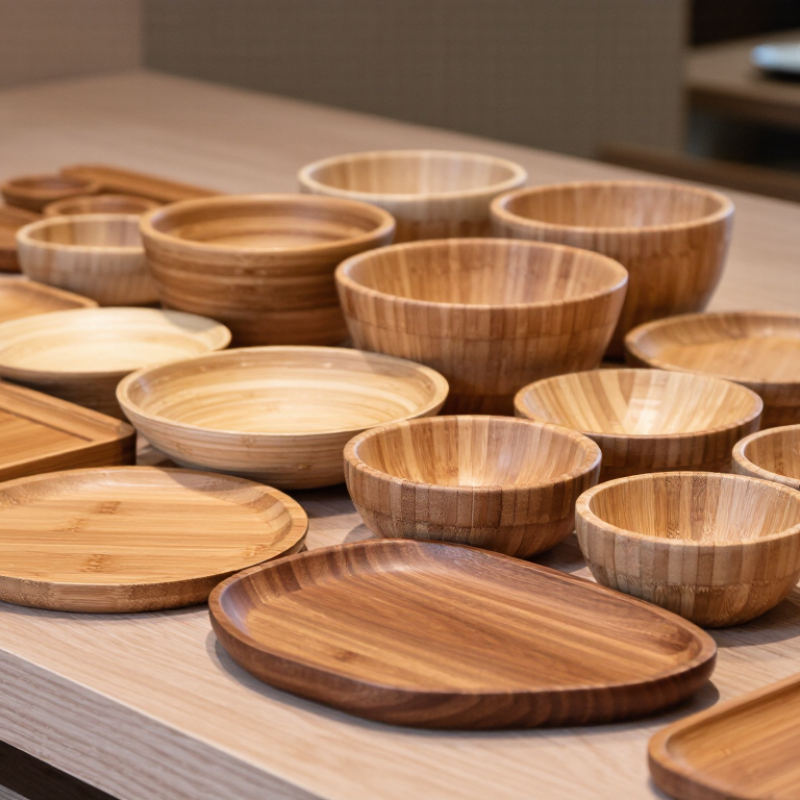
Cut or shaped from bamboo, usually with a protective finish. | Natural appearance; lightweight; suitable for serving dry or room-temperature foods when the finished item is made for food contact. | Can absorb moisture, stain, or crack if left wet. Usually requires hand washing and thorough drying; do not assume it is microwave- or dishwasher-safe. | Food-contact suitability depends on the complete finished product, including any finish or coating. Confirm intended uses and care instructions with the supplier. | Cafés, catering, and retail settings seeking reusable serving pieces for light-duty use. | Ask what coating is used, whether it is intended for food contact, and whether the item has been tested for the foods, temperatures, and contact times you expect. |
Laminated bamboo
Bamboo strips bonded into a board or dish using adhesive, often with a surface finish. | More consistent shape and thickness than many one-piece items; can be sturdy and visually uniform. | Water or heat can damage joints, adhesive, or finish. Follow the maker’s cleaning instructions; do not infer dishwasher or microwave suitability from appearance. | Adhesives and coatings are part of the food-contact article and need to be suitable for the intended conditions of use. | Businesses wanting reusable plates, trays, or serving boards with a uniform look. | Request details about adhesive and finish, intended temperature range, washing limits, and applicable food-contact test documentation. |
Bamboo-fiber plastic composite
Plant fiber or powder combined with a polymer resin; some products use melamine-formaldehyde resin. | Can be molded into consistent, colorful shapes and may be more rigid than unbound plant fiber. | Heat and care limits vary by formulation. Melamine tableware should not be used to heat food in a microwave; follow the product’s stated temperature and washing limits. | “Bamboo” does not by itself establish safety. In the EU, plastic food-contact articles containing unauthorized bamboo or other plant powders have been treated as non-compliant; check current destination-market rules before sourcing. | Only where the exact composition is disclosed and the product is confirmed compliant for the intended market and use. | Get the full material composition and market-specific compliance evidence. Do not rely on a generic “FDA approved” claim or a bamboo-content claim alone. |
Molded bamboo-pulp tableware
Formed from bamboo pulp or fiber, sometimes with binders, barriers, or surface coatings; commonly designed for single use. | Lightweight and convenient for takeaway or events. Some products are designed for hot, cold, or oily foods, depending on their barrier treatment. | Moisture, grease, and heat resistance differ by product. “Compostable” does not mean suitable for every food, temperature, or disposal system. | Confirm food-contact suitability for the exact food type and conditions. Compostability claims require separate evidence and apply only under the stated test and disposal conditions. | Takeaway, catering, and event service when a disposable format is needed. | Check for food-contact documentation, coating or additive details, temperature limits, and any compostability certification relevant to your local facilities. |