20% off Demo Text

7 Tips for Choosing the Best Charcuterie Board Set

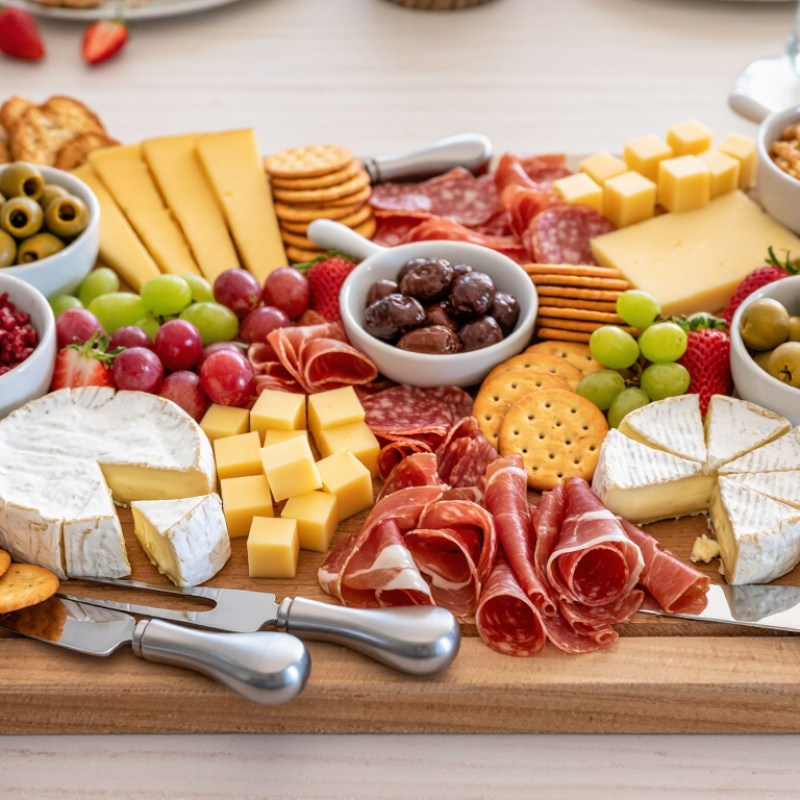
A good Charcuterie Board Set should make serving feel effortless, not crowded. The right pieces keep olives from rolling, knives within reach, and crackers crisp beside soft cheese. Yet a beautiful board can still be awkward to use. That small mismatch matters when guests are reaching across the table.

Cheese educator and author Marissa Mullen encourages a creative approach to cheese plates, often describing them as a “blank canvas.” That idea suits a charcuterie set, too: choose tools and materials that help you arrange food with balance and ease. In the tips ahead, we’ll look at board size, wood and care, knife quality, serving accessories, storage, and value. A deep groove may catch crumbs, but it can also complicate cleaning. A compact set saves cupboard space, though it may feel cramped during a gathering. Those are trade-offs worth noticing.

Start with how you actually host. A small apartment table, a family brunch, and a holiday buffet call for different boards. Check whether the knives feel comfortable, whether bowls sit securely, and whether the board can be cleaned without fuss. Details count. Not every set needs every accessory. Sometimes, fewer pieces work better—and sometimes, the first thing you notice is the one detail you overlooked.

7 Tips for Choosing the Best Charcuterie Board Set

Identify Your Serving Needs and Typical Group Size

Tip 1: Picture a typical gathering before choosing a charcuterie board set. A quiet evening for four needs less surface space than a family gathering of ten. Count the people you usually serve, not the largest crowd you might host once a year. I once chose a set that looked generous online but felt cramped once crackers, cheese, and small bowls were arranged. That was a useful, if slightly annoying, lesson.

Tip 2: Match the board and accessories to the food you actually serve. For mostly sliced cheese and fruit, a flat board with a few small serving utensils may be enough. If you often include olives, dips, or honey, look for room for bowls and a knife suited to firm cheese. Check the board’s usable area, too; handles and deep grooves can reduce space. More pieces are not always more useful.

Tip 3: Think about serving and cleanup. A large board can be awkward to carry from kitchen to table, especially when loaded. For regular groups of six to eight, a medium board with a stable grip may work better than an oversized set. Consider where it will dry and be stored. Measure the cupboard shelf first. It is easy to overlook that detail.

7 Tips for Choosing the Best Charcuterie Board Set - Identify Your Serving Needs and Typical Group Size

Use your usual guest count and serving style to choose a set that offers enough space, useful accessories, and practical storage.

Tip Typical Group Size Serving Need What to Look For in a Set Practical Guidance
1. Match the board to your usual guest count 2–4 people A small snack or light appetizer A compact board with enough room for a few cheeses, sliced meats, fruit, and crackers A board around 10–12 inches long can work for modest portions; leave space between foods so guests can serve themselves.
2. Plan for a small gathering 4–6 people An appetizer before a meal A medium board, or a set with a board and small serving bowls for dips and olives Look for a surface around 12–15 inches long. Separate bowls help keep moist or brined foods from touching dry items.
3. Allow room for a larger group 6–10 people A substantial shared appetizer A large board or a set with multiple boards that can be arranged together One oversized board may be heavy and harder to store. Two serving surfaces can make it easier for guests to reach the food.
4. Consider whether it will replace a meal 4–8 people A grazing spread or light meal A roomy board with space for cheeses, cured meats, bread or crackers, produce, and accompaniments Choose more usable surface area than you would for a simple appetizer, and consider adding bowls for spreads and other wet ingredients.
5. Check the accessory mix Any group size Serving different textures and food types Useful pieces such as cheese knives, small bowls, or separate serving utensils Prioritize accessories you will use. A knife suited to soft cheese and a separate utensil for spreads can make serving more convenient.
6. Choose a material that suits your routine Any group size Frequent use and straightforward care A stable, food-safe serving surface with clear care instructions Wood and bamboo boards generally need hand washing and prompt drying. Follow the maker’s care directions, especially for natural materials.
7. Think about storage and serving space Any group size Easy setup, carrying, and cleanup A board that fits your cupboards and table, with handles or a storage feature if useful Measure your storage space before buying. A board that is easy to lift, carry, and store is more likely to suit regular use.

Choose a Board Material That Suits Your Use and Care Preferences

The board material should match how you serve food and how much care you are willing to give it. Wood feels warm. It suits bread, cheese, and everyday serving, while its grain adds a natural look to the table. Hardwoods are often durable, but wood can absorb moisture and odors if left unwashed. Wash it by hand, dry it promptly, and avoid soaking it. A little food-grade mineral oil can help maintain an unfinished wooden surface, if the maker recommends it.

Bamboo is lightweight and usually easy to handle, though its seams and finish still deserve attention. Slate and other stone boards feel cool and create a clean backdrop for cheese or fruit. They are generally simple to wipe down, but can be heavy, chip if dropped, and scratch delicate countertops. Plastic boards are practical for frequent food preparation because many can go in the dishwasher. Check the care label, since heat and repeated washing can warp some boards.

Think about storage, too. A thick stone board may be awkward in a small kitchen, while a slim wooden one can slide into a cupboard. Honestly, appearance can sway the choice more than it should. I would check the board’s weight, surface, and cleaning instructions before buying. Choose a material you will actually care for; a beautiful board that stays in the cabinet is not much of a serving piece.

Compare Board Size, Shape, and Available Serving Space

Compare usable surface, not just a board’s outside dimensions. A 12-by-16-inch board can suit a small gathering, but bowls and handles quickly claim space. Set out the dishes you plan to use before buying; leave clear lanes for crackers and serving utensils.

A rectangular board fits neatly along a table edge, while a round one encourages guests to gather around. Neither shape wins every time. The table matters, too.

Think about replenishing food, not displaying everything at once. USDA FSIS’s “Keep Food Safe! Food Safety Basics” advises limiting perishable food at room temperature to two hours, or one hour when temperatures exceed 90°F. That makes a smaller board with nearby refill space more practical than an oversized, crowded arrangement.

Keep spare portions chilled, and bring them out as needed. It is easy to overestimate serving space. I’d leave one corner open for tongs and small plates; that empty patch may look wasteful, until guests reach for the brie.

A quick mock-up with bowls, sliced pears, and crackers can reveal awkward gaps before the board reaches the table.

Check the Set’s Tools, Accessories, and Build Quality

7 Tips for Choosing the Best Charcuterie Board Set

Check the Set’s Tools, Accessories, and Build Quality

Tip 1: Check the tools before judging the board. A useful set should include a small knife for firm cheese, a spreader for soft cheese, and a fork for serving. Handles should feel steady, not slick or awkward. I’ve found that a comfortable grip matters more than a shiny finish.

Tip 2: Look closely at the accessories. Small bowls can hold olives or honey, while grooves help keep crackers from sliding. Make sure the pieces fit your usual snacks. Extra items are not always useful.

Tip 3: Inspect the board’s construction. Run a finger along its edges and check for rough spots, cracks, or wobbling feet. A solid board should sit flat on the table. Wood grain varies, so small differences in color are normal. That said, deep splits deserve a closer look.

Tip 4: Consider cleaning and storage. Removable bowls and simple tools are easier to wash and put away. Check care instructions before buying; some boards need hand-washing and occasional oiling. I once overlooked that detail, and it made cleanup less convenient.

Tip 5: Match the set to your serving habits. A compact board works for a quiet snack, but crowded food is hard to reach.

Tip 6: Test the weight if possible. Too light can feel flimsy; too heavy may be awkward to carry.

Tip 7: Compare the tool quality with the board itself. A beautiful surface cannot make up for loose handles or blunt blades. Good enough is sometimes better than elaborate.

Assess Storage, Cleaning, and Overall Value Before Buying

Storage is easy to overlook when comparing charcuterie board sets. Check the board’s dimensions against your cupboard, and see whether its handles or accessories make it awkward to store flat. A removable tray can keep crackers and small knives together, but extra pieces need extra space. For everyday use, a simple set may be more practical.

Tip: Check the care label before buying. USDA FSIS guidance says perishable foods should not sit at room temperature for more than two hours, or one hour above 90°F. A board that cleans quickly with hot, soapy water makes post-serving cleanup less of a chore. Avoid assuming every wooden board is dishwasher-safe; trapped moisture can cause warping or cracks.

Assess value by considering likely use, not piece count alone. Divide the price by how often you expect to serve on it, then compare that cost with the board’s durability and cleaning needs. A low-priced set may include tools you rarely touch. I have found that storage convenience matters more than a crowded accessory bundle, though that is easy to underestimate before the first dinner party.

7 Tips for Choosing the Best Charcuterie Board Set

Compare the practical factors below before buying. Higher scores indicate greater importance in an everyday buying decision; these are editorial guide scores, not survey results.

Prioritize easy-to-clean surfaces and convenient storage, then check board size, material care instructions, included serving tools, durability, and overall value. Care requirements vary by material and manufacturer, so follow the product’s instructions.