20% off Demo Text

How to Choose the Right Filter Funnel in 2026?

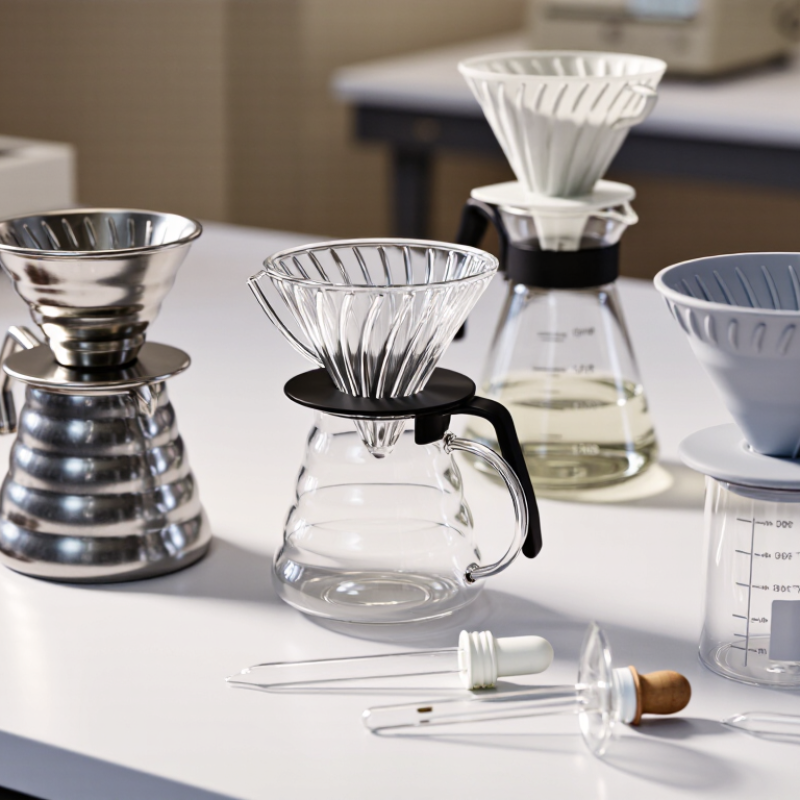
Choosing the right Filter Funnel in 2026 requires more than comparing prices or attractive product photos. The best choice depends on application, material, flow control, and cleaning demands. A funnel used for coffee brewing needs different features from one used in laboratory or industrial filtration. That difference is easy to overlook.

Coffee educator James Hoffmann offers a useful principle: “The best coffee is the coffee you like.” The same idea applies to filter equipment. The best Filter Funnel is the one that suits your process, not the one with the longest specification sheet. Consider stainless steel for durability, heat-resistant glass for visibility, or food-grade plastic for lighter handling. Check the filter size carefully. A mismatch can cause leaks, slow drainage, or unwanted sediment. Small details matter. Really matter.

In this guide, we will examine funnel shape, mesh density, capacity, connection design, and cleaning access. We will also discuss compatibility with paper, cloth, and reusable filters. In practical testing, a narrow outlet may improve control but increase waiting time. A wide outlet may drain faster but offer less precision. There is no perfect design.

I have found that real use reveals weaknesses quickly. A funnel may feel stable on a dry counter, then wobble when filled with hot liquid. Some models look professional but are awkward to clean. That is worth admitting. Product claims should be checked against material data, user reviews, and relevant safety standards. By 2026, informed buyers should value traceable specifications over vague marketing promises.

How to Choose the Right Filter Funnel in 2026?

Define Filtration Goals Using ASTM E11 Particle-Size Classifications

How to Choose the Right Filter Funnel in 2026?

A reliable funnel choice starts with the particle size you must capture. ASTM E11 defines standard test sieve openings, such as 250 µm, 150 µm, and 75 µm. These values help translate a vague goal into a measurable filtration range. A sample passing a 150 µm sieve contains particles smaller than that opening, while retained material is larger. Record both fractions. They reveal more than a simple “fine” or “coarse” label.

Match the funnel to the separation task. A wide funnel suits larger solids and reduces clogging during gravity filtration. A smaller funnel may conserve liquid, but it can slow the process when the sample contains many particles. For vacuum work, check the seal, support screen, and filter compatibility. Wetting the medium can improve contact, although it may change the sample volume. I have seen hurried testing produce clean-looking filtrate with incomplete separation. That mistake is easy to miss.

Tips: Write the target sieve opening beside the funnel specification. Confirm whether the filter retains particles above or below that value. Test a small portion first. Inspect the residue under suitable lighting. ASTM E11 supports consistent sieve measurements, but it does not replace a method-specific validation. Temperature, viscosity, loading, and washing technique can shift results. Leave room for that uncertainty.

Choose Gravity, Büchner, or Hirsch Funnels by 10–2,000 mL Capacity

Choosing the right filter funnel in 2026 starts with sample volume, not appearance. A 10 mL sample needs a different funnel from a 2,000 mL batch. Gravity funnels suit clear liquids, gentle filtration, and routine work. They are simple, affordable, and useful when vacuum equipment is unavailable. However, fine particles can make gravity filtration painfully slow.

Büchner funnels are better for vacuum filtration and larger solid loads. Their flat, perforated surface supports filter paper across a wider area. This helps process medium to high volumes more efficiently. Hirsch funnels suit small samples, often from 10 to 100 mL. Their smaller cone reduces material loss, especially when the collected solid matters. Check the receiving flask carefully. A 2,000 mL funnel may still overflow if the flask is too small.

Tips: Match the funnel diameter to the filter paper. Poor sizing creates leaks around the edges. Confirm chemical compatibility before use, including the funnel, gasket, and flask. Apply vacuum gradually, not suddenly. I once focused only on capacity and ignored viscosity; filtration became far slower than expected. That mistake still influences my selection process. Also consider whether the sample contains coarse crystals, fine powders, or almost no solids. Capacity labels are useful, but they are not complete instructions.

How to Choose the Right Filter Funnel in 2026?

Choose gravity, Büchner, or Hirsch funnels by typical laboratory capacity from 10 to 2,000 mL.

Gravity funnels cover the broadest range and are suitable when gentle filtration is preferred. Büchner funnels are commonly selected for medium-to-large solid collections when vacuum filtration is available. Hirsch funnels are designed for small-scale precipitates and typically offer the best control for samples from about 10 to 100 mL. Actual working capacity depends on funnel geometry, filter-paper size, solid loading, and the receiving vessel.

Match Filter Media to 0.2–11 μm Ratings from Cytiva Technical Data

How to Choose the Right Filter Funnel in 2026?

Filter funnel selection starts with the filter media, not the funnel shape. Published technical data should show pore size, flow rate, pressure limits, and chemical compatibility. A 0.2 μm membrane supports fine clarification, but it does not automatically prove sterile performance. ASTM F838 and ISO 29463 recommend validated retention testing for critical filtration claims. For larger particles, 5–11 μm media can reduce visible debris while maintaining faster flow. The choice depends on the sample.

Match the funnel diameter to the active filter area. A wide funnel can shorten processing time, while a narrow design may reduce waste for small batches. Glass, polymer, or metal construction must tolerate the solvent, temperature, and cleaning method. In laboratory practice, I check the wetted materials twice. Compatibility tables are useful, but real samples can behave differently. That is an uncomfortable detail.

Industry reports on biopharmaceutical manufacturing continue to highlight filtration capacity, single-use workflows, and process consistency as major operational priorities. A funnel rated for 0.2 μm media may still perform poorly if the membrane loads quickly. With 11 μm media, excessive vacuum can also distort flow through viscous samples. Keep the test visible: record volume, filtration time, pressure, and residue. Small notes often reveal the wrong match.

Check Chemical Compatibility Against ISO 11114-1 Material Standards

How to Choose the Right Filter Funnel in 2026?

Chemical compatibility should guide filter funnel selection, not appearance or price. Check every wetted component, including the funnel body, membrane, support screen, gasket, and vacuum connection. A liquid may tolerate one material but weaken another after repeated exposure. Watch for swelling, discoloration, cracking, or a sticky surface. Small changes matter.

ISO 11114-1 provides a recognized framework for evaluating material compatibility with gases and gas mixtures. It is not a universal certification for every filter funnel or liquid application. However, it can support decisions when compressed gases contact the funnel, fittings, or connected equipment. Review the standard’s material guidance alongside the chemical’s safety data sheet and concentration limits. Temperature and pressure also deserve attention.

I have seen compatibility charts treated as final answers. They are not. Exposure time, cleaning cycles, and mechanical stress can change performance. Test a small sample under realistic conditions when possible. Inspect it afterward. A funnel that survives one quick filtration may fail during overnight contact. That detail is easy to miss. Choose materials supported by documented test data, and record your reasoning for future batches. Even careful selections can need revision.

How to Choose the Right Filter Funnel in 2026? - Check Chemical Compatibility Against ISO 11114-1 Material Standards

Material-selection guide for laboratory filtration applications

Funnel Material Typical Chemical Compatibility Important Limitations Temperature Guidance ISO 11114-1 Compatibility Consideration Recommended Use
Borosilicate Glass Generally resistant to water, dilute acids, many solvents, and most aqueous laboratory solutions. Can be attacked by hydrofluoric acid, hot concentrated alkalis, and strong alkaline solutions. Brittle and vulnerable to thermal shock. Suitable for many laboratory temperatures; avoid sudden temperature changes and verify the manufacturer’s maximum rating. Glass is not normally treated as a pressure-cylinder material under ISO 11114-1. Use the standard only as a material-compatibility reference, not as a funnel certification. General-purpose gravity filtration, solvent filtration, and applications requiring visual inspection.
Polypropylene (PP) Good resistance to many aqueous acids, bases, salts, and selected alcohols. Limited resistance to some aromatic hydrocarbons, chlorinated solvents, and strong oxidizing agents. May become brittle after prolonged exposure to UV or aggressive chemicals. Often suitable for moderate laboratory temperatures; exact limits depend on design, wall thickness, and chemical load. Polypropylene is a non-metallic material. ISO 11114-1 principles emphasize evaluating chemical reaction, degradation, permeation, and stress effects; verify the specific chemical and exposure conditions. Routine aqueous filtration, disposable funnels, and applications requiring low breakage risk.
Polytetrafluoroethylene (PTFE) Excellent resistance to most acids, bases, solvents, and oxidizing chemicals under appropriate conditions. Soft and comparatively flexible; may deform under load at elevated temperatures. Some molten alkali metals and highly reactive fluorinating conditions require special review. Broad temperature capability, but the funnel’s actual operating limit must be confirmed from its construction and support method. PTFE is commonly selected where non-metallic chemical compatibility is critical. ISO 11114-1 screening should still consider temperature, pressure, permeation, and long-term exposure. Highly aggressive chemical filtration, trace analysis, and applications involving strong solvents or acids.
Polyvinylidene Fluoride (PVDF) Good resistance to many acids, aliphatic solvents, hydrocarbons, and halogens; suitable for many demanding aqueous processes. Compatibility can be reduced by strong bases, certain polar aprotic solvents, and elevated temperatures. Suitable for moderate-to-elevated laboratory temperatures within the component supplier’s specified range. Evaluate chemical attack and permeation in the same way required for non-metallic materials used with compressed gases; ISO 11114-1 does not establish a universal PVDF approval list. Chemical processing, aggressive aqueous solutions, and applications requiring higher rigidity than PTFE.
Nylon (Polyamide) Useful with many oils, hydrocarbons, and alkaline solutions when exposure is controlled. Can absorb moisture and may be attacked by strong acids, some phenols, and certain halogenated solvents. Temperature and dimensional stability may change with moisture uptake and prolonged heat exposure. Moisture absorption, swelling, permeation, and loss of mechanical strength should be assessed before use with gases or reactive chemicals. Dry, non-oxidizing laboratory processes where mechanical strength and low cost are priorities.
Stainless Steel Good mechanical strength and resistance to many aqueous and organic chemicals, depending on alloy grade and surface condition. Susceptible to corrosion from chlorides, strong acids, halogens, and certain reducing environments. Metal ions may contaminate sensitive samples. Usually handles higher temperatures than common polymers; verify alloy, weld quality, seals, and operating conditions. ISO 11114-1 is primarily relevant to the compatibility of metallic materials with gases. Check corrosion, embrittlement, ignition risk, and gas-specific reactions for any pressurized service. Durable industrial filtration, solvent recovery, and applications requiring rigidity or grounding.
Polyethylene (PE) Good resistance to many dilute acids, bases, salts, and water-based chemicals. Limited resistance to some aromatic and chlorinated solvents, strong oxidizers, and elevated-temperature exposure. Can be relatively flexible. Best suited to ambient or moderate-temperature service; verify the grade and exposure duration. For non-metallic materials, assess swelling, permeation, chemical degradation, and mechanical-property changes rather than relying on material name alone. Aqueous filtration, corrosive dilute solutions, and lightweight disposable laboratory equipment.

Selection Notes

  • ISO 11114-1 addresses the compatibility of metallic and non-metallic materials with compressed gases and is not a general certification standard for laboratory filter funnels.
  • For compressed-gas or pressurized filtration, assess the complete assembly, including the funnel body, membrane, gasket, fittings, tubing, and seals.
  • Confirm compatibility using the exact chemical concentration, temperature, pressure, exposure time, cleaning method, and mechanical load.
  • For critical or hazardous applications, obtain written compatibility data and pressure ratings from the component manufacturer before operation.

Validate Vacuum Performance with ASTM F316 Bubble-Point Testing

How to Choose the Right Filter Funnel in 2026?

A suitable filter funnel should match the membrane diameter, sample volume, and expected vacuum load. A poor seal can imitate a damaged membrane. Choose a funnel with a rigid support plate, even clamping pressure, and a chemically compatible gasket. Check the receiver connection too. Small leaks often hide around tubing joints.

ASTM F316 bubble-point testing provides a practical way to examine membrane integrity and pore-size behavior. Wet the membrane completely with the specified liquid before testing. Then increase gas pressure gradually while observing the first continuous stream of bubbles. Record the pressure, temperature, membrane type, and wetting liquid. Use a calibrated gauge. Small details matter.

The bubble point reflects the largest effective pore, not the total filtration performance. It also does not directly prove that a vacuum pump delivers its rated capacity. That distinction is easy to miss. For a vacuum filtration setup, run a leak check separately, then compare the measured bubble point with the membrane supplier’s validated range. If results drift, inspect the gasket, support screen, wetting process, and pressure ramp. I would not blame the membrane too quickly. Operator technique can change the reading. Retesting with a fresh, fully wetted membrane may reveal the real problem.