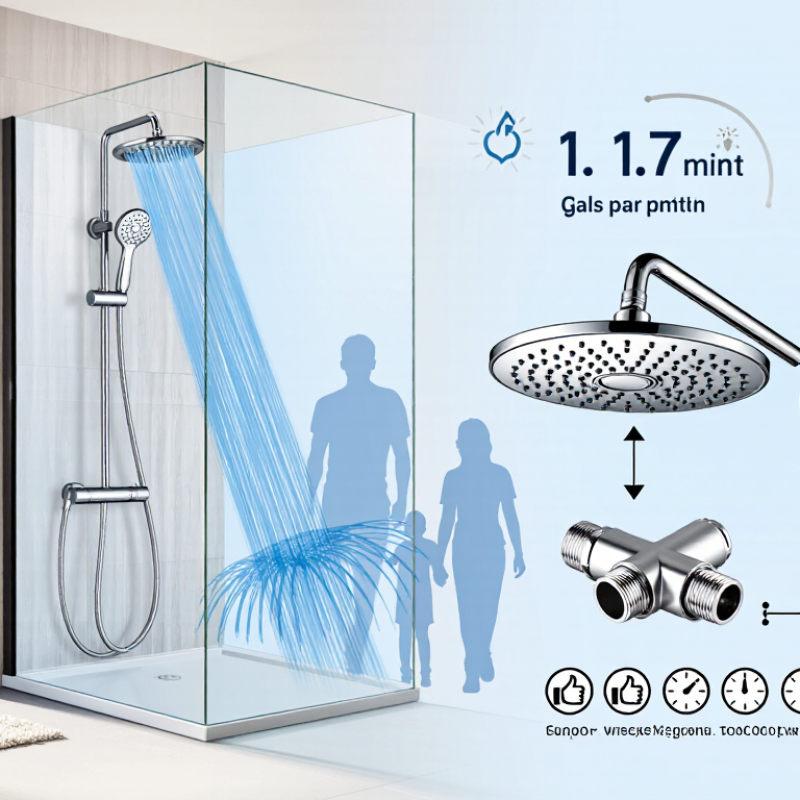
| Rain or Full-Coverage Spray | Choose a model rated between 1.5 and 2.0 gallons per minute (5.7–7.6 L/min) for an efficient full-body spray. | Soft, broad, and evenly distributed. | Everyday showers and users who prefer gentle coverage. | A wide spray may feel less forceful if household water pressure is low. | Best all-around option when comfort and moderate water savings are priorities. |
| Massage or Pulsating Spray | A focused spray can provide stronger sensation without requiring a higher flow rate; look for an adjustable model rated at 1.5–2.0 GPM. | Rhythmic, concentrated, and more forceful. | Muscle relaxation, rinsing thick hair, and users who prefer noticeable pressure. | The narrow stream may feel uncomfortable for sensitive skin. | Choose when spray intensity matters more than wide coverage. |
| Jet or Targeted Spray | The concentrated outlet can rinse efficiently at approximately 1.5–2.0 GPM, depending on the product design. | Powerful and highly directed. | Removing shampoo, cleaning the shower, or rinsing hard-to-reach areas. | It covers a smaller area and may splash more on some surfaces. | A practical choice for fast rinsing and focused cleaning. |
| Mist or Micro-Droplet Spray | Often designed for very low flow, but actual savings vary significantly by nozzle design and household use. | Light, airy, and cooling. | Short showers, warm climates, and users who enjoy a delicate spray. | The spray can feel cooler because fine droplets lose heat more quickly in the air. | Select only if you are comfortable with a lighter spray sensation. |
| Combination or Multi-Mode Selector | Savings depend on the selected mode; choose a unit with a maximum rated flow of 2.0 GPM or less. | Adjustable from soft coverage to focused pressure. | Shared households with different comfort and rinsing preferences. | More moving parts can make the control harder to operate or clean. | The most versatile option for families and changing needs. |
| Aerating Spray | Mixing air with water can help maintain volume and comfort at a lower flow rate, commonly 1.5–2.0 GPM. | Full and soft, with a slightly bubbly sensation. | Users who want a comfortable spray while reducing water use. | The spray may feel cooler than a dense, non-aerated stream. | A strong option for balancing perceived coverage and efficiency. |
| Flow Restrictor or Flow Regulator | Limits the maximum water flow. A 2.0 GPM shower head uses up to 20% less water than a 2.5 GPM model under the same conditions. | Depends on the spray plate and pressure-compensation design. | Homes seeking predictable water use and lower hot-water demand. | Very restrictive designs may feel weak in low-pressure plumbing systems. | Check the certified or stated maximum flow before buying. |
| Pause or Shut-Off Button | Can prevent water waste while lathering, shaving, or waiting for assistance; savings depend on user behavior. | Maintains a low trickle or temporarily stops the spray. | Longer routines and households focused on reducing avoidable flow. | Confirm that the control is easy to reach and does not alter the temperature unexpectedly. | Useful when behavioral control is more important than changing spray style. |
| Pressure-Compensating Design | Helps keep flow more consistent as supply pressure changes, but it does not eliminate the need to check the rated flow. | More stable and predictable across different pressure conditions. | Apartments, upper floors, and homes with fluctuating water pressure. | It cannot compensate for severely inadequate plumbing pressure. | Prioritize this feature when pressure varies during the day. |
| Easy-Clean Nozzles | Supports long-term efficiency by making mineral buildup easier to remove and helping maintain the intended spray pattern. | More consistent spray performance over time. | Hard-water areas and households that want simple maintenance. | Nozzle cleaning does not replace periodic inspection of the filter and inlet screen. | A valuable durability feature for maintaining water efficiency. |