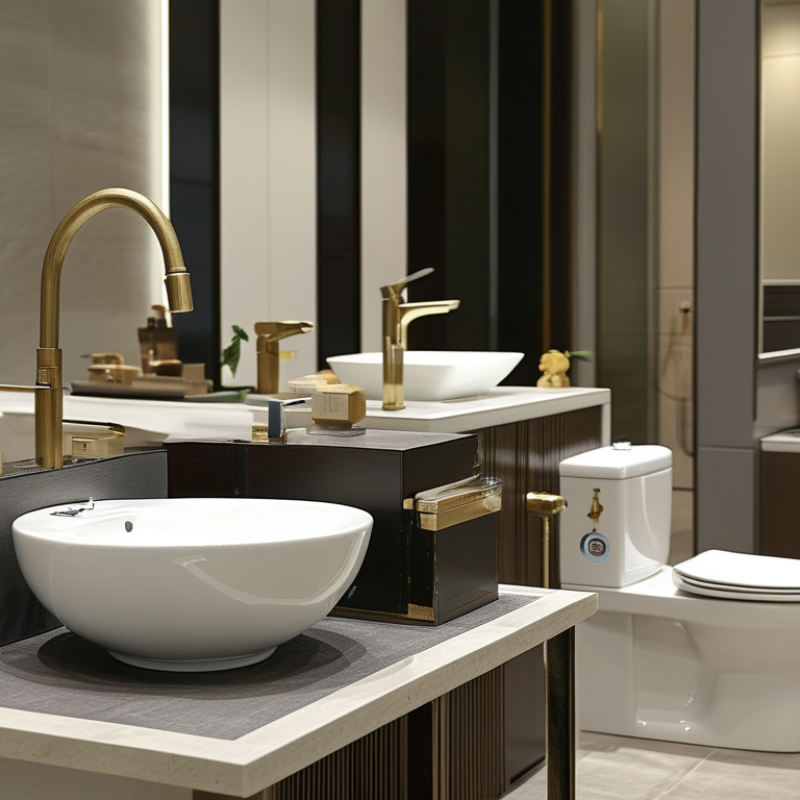
| Product Range Planning | Manufacturers usually combine coordinated bathroom products, such as basins, toilets, bathtubs, shower components, furniture, mirrors and accessories. | A complete set commonly includes 3–8 coordinated product categories, depending on the project specification. | A coordinated range simplifies installation, purchasing and visual design consistency. |
| Market and User Research | Design teams review bathroom sizes, plumbing layouts, accessibility requirements, water-saving expectations and cleaning preferences. | Common design inputs include compact-room widths, standard waste positions, installation clearances and regional plumbing practices. | Products that match local installation conditions can reduce modification work and site delays. |
| Concept and CAD Design | Manufacturers create 2D drawings, 3D models, assembly layouts and production-ready engineering files before tooling. | Design reviews normally check dimensions, wall thickness, load paths, drainage, tolerances and compatibility between components. | Early engineering checks help prevent fit, leakage and assembly problems during mass production. |
| Ceramic Body Production | Sanitaryware is commonly produced through slip casting, pressure casting or vitreous-china forming, followed by drying, glazing and kiln firing. | Typical kiln firing temperatures for vitreous china are approximately 1,200–1,250°C, depending on the clay body and process. | Controlled firing improves strength, dimensional stability, glaze quality and resistance to water absorption. |
| Metal Component Manufacturing | Taps, frames, brackets and accessories are commonly made by forging, casting, stamping, machining, welding or tube forming. | Common material choices include brass, stainless steel, aluminium and zinc alloys, selected according to strength, corrosion resistance and cost. | Material selection affects service life, surface quality, weight and compatibility with wet environments. |
| Surface Finishing | Finishing may include glazing, polishing, electroplating, powder coating, anodising or protective clear coating. | Surface inspections commonly assess colour consistency, gloss, adhesion, scratches, pinholes, blistering and corrosion resistance. | A durable finish improves appearance and helps protect products from moisture, cleaning chemicals and daily abrasion. |
| Water Efficiency Development | Manufacturers optimise flush systems, tap cartridges, aerators and shower fittings to reduce water use without compromising performance. | Dual-flush toilets commonly use approximately 3/6 litres or 3/4.5 litres per full/reduced flush, subject to the applicable standard. | Lower water consumption can reduce operating costs and support green-building requirements. |
| Prototype and Sample Approval | A prototype or pre-production sample is reviewed for dimensions, function, appearance, installation method and packaging before volume manufacture. | Typical approval documentation includes drawings, approved samples, colour references, inspection criteria and revision records. | A signed sample provides a clear quality reference for subsequent production batches. |
| Quality Control | Quality teams inspect incoming materials, in-process components, finished goods and randomly selected packed units. | Common checks include dimensional tolerance, water leakage, drainage, load resistance, operating force, coating adhesion and visual defects. | Multi-stage inspection reduces the risk of defective products reaching the installation site. |
| Testing and Compliance | Products are tested against the standards and regulations required in their destination market. | Relevant requirements may cover plumbing performance, electrical safety, structural strength, chemical safety, accessibility and water efficiency. | Compliance evidence supports legal sale, project approval and specification acceptance. |
| Assembly and Functional Testing | Components are assembled, adjusted and tested before packing, particularly for taps, toilets, shower systems, furniture and illuminated products. | Functional checks may include flow, drainage, flushing, water tightness, door alignment, drawer movement and electrical operation. | Pre-shipment testing lowers installation failures and after-sales service costs. |
| Packaging and Transportation | Packaging is designed to protect fragile ceramic, glass and finished surfaces during handling, storage and transport. | Typical protective measures include moulded inserts, edge protection, moisture-resistant cartons, internal bracing and clear handling labels. | Effective packaging reduces breakage, surface damage and replacement costs. |
| Production Lead-Time Planning | Lead time depends on tooling, raw materials, product complexity, order quantity, testing requirements and shipping arrangements. | Standard repeat products often require several weeks, while new products may require additional time for tooling, sampling and compliance testing. | A documented production schedule helps coordinate construction, retail replenishment and installation dates. |
| After-Sales Support | Manufacturers commonly provide installation instructions, spare-parts information, warranty procedures and technical support. | Useful documentation includes exploded diagrams, maintenance guidance, replacement-part codes and troubleshooting instructions. | Accessible technical support improves maintainability and extends the useful life of bathroom products. |