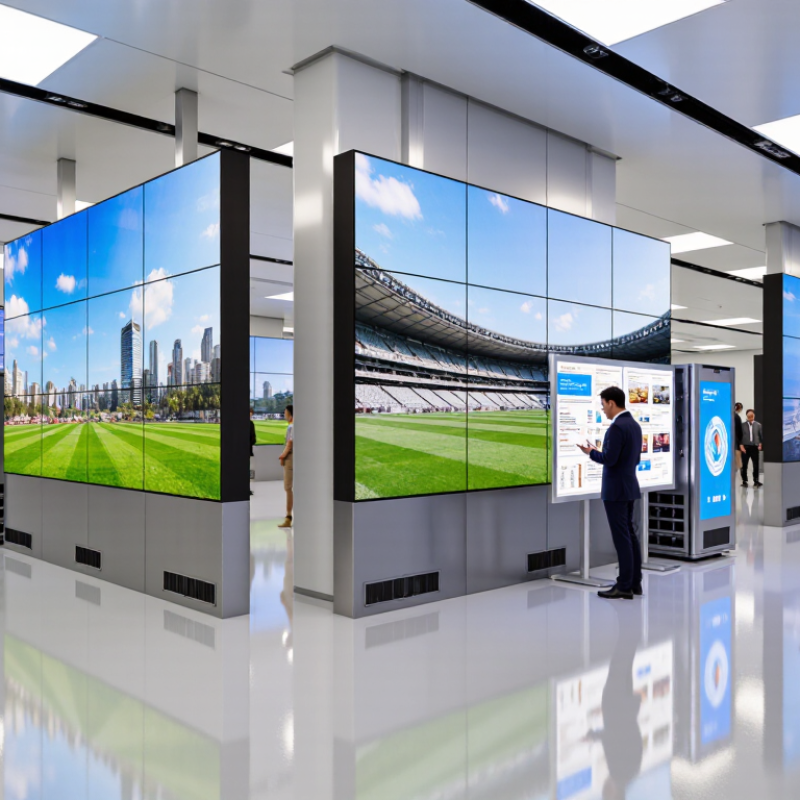
| Indoor Fine-Pitch LED Screen | 0.9–2.5 mm | SMD; COB is increasingly used for sub-1.5 mm products | 600–1,200 nits | 1,920–7,680 Hz | Usually IP30 or higher for indoor environments | Control rooms, meeting rooms, broadcast studios, retail stores, museums and corporate lobbies | High image detail, close-viewing performance, seamless design and wide viewing angles | Requires careful calibration, suitable ambient-light control and precise installation |
| Outdoor Fixed LED Screen | 3.9–10 mm | Outdoor SMD, commonly with high-brightness red, green and blue LEDs | 4,500–8,000 nits | 1,920–4,800 Hz | Typically IP65 front and IP54–IP65 rear | Building façades, roadside advertising, stadiums, transportation hubs and public squares | Strong daylight visibility, weather resistance and suitability for large viewing distances | Needs structural engineering, drainage, ventilation and compliance with local installation regulations |
| Rental and Staging LED Screen | 2.6–4.8 mm | Indoor or outdoor SMD modules | 3,500–6,000 nits | 3,840–7,680 Hz | Often IP65 for outdoor-capable cabinets | Concerts, exhibitions, conferences, festivals, sports events and temporary advertising | Lightweight cabinets, fast assembly, front or rear service options and stacking or hanging capability | Frequent transport requires impact-resistant cabinets, secure locking systems and spare modules |
| COB LED Display | 0.9–1.5 mm in many fine-pitch products | Chip-on-board LED packaging with a protective surface layer | 600–1,500 nits | 3,840–7,680 Hz | Commonly IP30–IP54 for indoor models | Premium control rooms, command centers, high-end conference spaces and virtual production environments | Improved surface protection, reduced pixel damage risk and strong close-range image quality | Higher initial cost and more specialized repair or module-replacement procedures |
| Transparent LED Screen | 3.9–10 mm | Transparent SMD bars or mesh-style LED structures | 3,000–6,000 nits | 1,920–4,800 Hz | Varies by cabinet design; outdoor models may reach IP65 front protection | Glass façades, shopping malls, airports, stage backdrops and architectural installations | Approximately 60–90% transparency, reduced visual obstruction and comparatively low wind load | Image contrast depends on the background; glass structure, sunlight and viewing angle must be assessed |
| Flexible and Curved LED Screen | 1.5–4 mm | Flexible SMD modules on bendable PCBs or soft modules | 800–4,000 nits | 1,920–3,840 Hz | Usually designed for indoor use; outdoor protection depends on the complete enclosure | Curved columns, creative retail displays, exhibitions, museums, stages and interior architecture | Supports concave, convex, cylindrical and custom-shaped installations | Requires a precisely built mounting structure and should not be bent beyond the specified radius |
| Outdoor Stadium and Perimeter LED Screen | 4.8–10 mm | High-brightness outdoor SMD | 5,000–8,000 nits | 3,840–7,680 Hz | Typically IP65 front and rear, with impact protection for sports venues | Football fields, basketball courts, motorsport venues and large public event spaces | High visibility, wide viewing angles and optional soft masks or protective panels for player safety | Must address impact resistance, viewing-angle requirements, refresh performance and venue safety standards |
| LED Poster and Portable Display | 2.5–4 mm | Indoor SMD, sometimes combined with an integrated media player | 800–2,500 nits | 1,920–3,840 Hz | Generally intended for indoor environments | Retail promotions, hotels, restaurants, exhibitions, reception areas and point-of-sale advertising | Compact footprint, quick deployment, built-in control systems and easy content updates | Limited screen size and brightness compared with fixed-installation LED walls |