| 1. Butt Hinge | Interior, bedroom, bathroom, and general residential wooden doors | 75–100 mm leaf height; 2–3 mm leaf thickness | Approximately 40–80 kg | 90–180°, depending on the knuckle and frame clearance | Mortised into the door edge and frame | Steel, stainless steel, or brass; satin, polished, black, bronze, or plated finishes | Widely available, economical, strong, and suitable for many door constructions | Select the correct hinge thickness, screw pattern, and quantity for the door weight |
| 2. Pivot Hinge | Heavy wooden entrance doors, oversized doors, and doors requiring a clean hinge line | Typical top and bottom pivot sets for doors 35–60 mm thick | Approximately 80–150 kg | 90–180°, depending on the pivot design | Installed at the top and bottom of the door, usually with a floor or head-frame pivot | Stainless steel, steel, or aluminum; concealed or architectural finishes | Supports heavier doors and reduces stress on the side jamb | Check floor strength, head-frame clearance, pivot offset, and door alignment requirements |
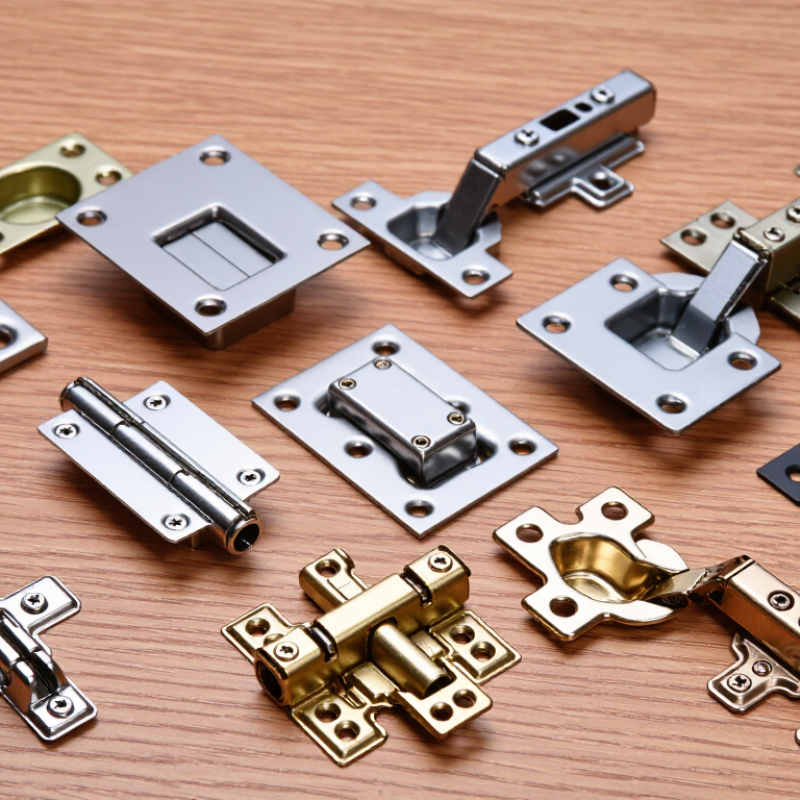
| 3. Concealed Hinge | Modern interior doors, flush doors, premium residential doors, and minimalist projects | Typical cup or body depth: 20–30 mm; adjustable models are common | Approximately 40–120 kg per pair | Commonly 90–180° | Recessed into the door edge and frame; usually requires accurate routing | Zinc alloy, steel, or stainless steel; nickel, satin, black, or powder-coated finishes | Hidden when the door is closed, with a clean appearance and multi-directional adjustment | Confirm routing dimensions, minimum door thickness, adjustment range, and frame compatibility |
| 4. Continuous Hinge | High-use wooden doors, tall doors, security doors, and doors needing even load distribution | Usually the full door height; commonly 1,800–2,400 mm long | Approximately 90–225 kg, depending on the model and fixing method | Typically 90–180° | Surface-mounted or mortised continuously along the door and frame | Steel, stainless steel, or aluminum; anodized, satin, or painted finishes | Reduces hinge-side stress, helps prevent sagging, and provides consistent support | Measure the full door height and verify screw spacing, frame type, and required clearances |
| 5. Strap Hinge | Barn doors, gates, rustic wooden doors, sheds, and traditional architectural projects | Strap length commonly 200–600 mm; strap width often 25–75 mm | Approximately 50–150 kg per pair | Usually 90–180° | Surface-mounted with the long strap visible on the door face | Wrought iron, mild steel, stainless steel, or cast iron; black, antique, galvanized, or powder-coated finishes | Provides strong visual character and distributes force over a larger area of the door | Use through-bolts or adequate structural screws when the door is heavy or exposed to wind |
| 6. T-Hinge | Garden gates, workshop doors, shed doors, stable doors, and rustic timber doors | Common strap length: 200–500 mm; mounting plate width varies by design | Approximately 40–120 kg per pair | Typically 90–180° | Surface-mounted on the door and frame | Steel, wrought iron, or stainless steel; black, galvanized, antique, or painted finishes | Simple to install, visually distinctive, and suitable for many thick timber doors | Match the hinge length and screw pattern to the door width, weight, and frame strength |
| 7. Parliament Hinge | Rebated doors, deep frames, casement-style wooden doors, and heritage renovations | Typical leaf lengths: 75–150 mm; projecting knuckle or offset varies by model | Approximately 30–70 kg per pair | Often 90–180° | Surface-mounted or partially recessed, with an offset that clears deep reveals | Brass, steel, stainless steel, or wrought iron; polished, satin, antique, or black finishes | Allows the door to clear a deep frame, wide trim, or projecting reveal | Measure the frame depth and offset carefully to prevent interference during opening |
| 8. T-Hinge with Rising Action | Traditional external doors, cottage doors, cellar doors, and timber doors exposed to moisture | Typical strap length: 250–500 mm; rising pitch depends on the hinge design | Approximately 40–100 kg per pair | Usually 90–180° | Surface-mounted; the angled knuckle gradually lifts the door during opening | Steel, wrought iron, or stainless steel; galvanized, black, or weather-resistant finishes | Can help the door close by gravity and is suitable for traditional door designs | Confirm the rising direction, door clearance, and suitability for accessibility requirements |
| 9. Spring Hinge | Interior utility doors, light commercial doors, and doors requiring automatic closing | Commonly 75–100 mm hinge leaf height | Approximately 30–70 kg per pair | Typically 90–180° | Mortised like a standard butt hinge; spring tension is adjusted after installation | Steel, stainless steel, or brass; satin, polished, black, or plated finishes | Provides self-closing action without a separate overhead door closer | Check closing force, adjustment range, fire-door requirements, and the number of spring hinges needed |
| 10. Piano Hinge | Full-length cabinet doors, folding wooden panels, storage doors, and lightweight partition doors | Continuous lengths commonly supplied from 300–2,000 mm; leaves often 25–50 mm wide | Approximately 20–80 kg, depending on length, thickness, and fixing spacing | Commonly 180–270°, depending on the application and clearance | Surface-mounted or recessed continuously along the full edge | Steel, stainless steel, brass, or aluminum; polished, satin, galvanized, or black finishes | Provides continuous support and a neat solution for long, lightweight wooden panels | Cut to the required length carefully and use adequate screws across the entire fixing line |