20% off Demo Text

Why Choose U100 Dried Apple for Global Sourcing?

Global buyers are rethinking how fruit ingredients support cost, consistency, and cleaner supply chains. FAOSTAT recorded global apple production at more than 95 million tonnes in 2022, creating a broad raw-material base for dried apple sourcing. Yet fresh apples remain seasonal, fragile, and expensive to transport over long distances. Drying removes much of the water, reduces handling volume, and creates a shelf-stable ingredient for cereals, bakery products, snacks, teas, and foodservice.

This is where u100 dried apple can attract professional attention. In many supplier markets, “U100” refers to a size or count specification, but the meaning is not globally standardized. Buyers must confirm the definition, cut size, moisture level, sulphite status, packaging, and test methods in writing. Small details matter. A uniform slice should dry evenly and fill a pouch consistently. It should not crumble into dust during loading.

Trade data under HS 081330, reported through the International Trade Centre’s Trade Map, helps buyers review dried-apple flows, supplier countries, and declared trade values. The USDA’s Foreign Agricultural Service also provides useful crop and market context, although dried-product categories can differ by country. These reports guide decisions, but they do not replace factory audits or laboratory verification.

The practical case is clear. u100 dried apple can support predictable portions, easier inventory planning, and year-round product development. Still, the lowest quote may hide higher breakage, variable moisture, or weak traceability. That is an uncomfortable point. Global sourcing works best when specifications, certificates, harvest records, and retention samples are checked before purchase. Reliability starts with evidence, not a label.

Why Choose U100 Dried Apple for Global Sourcing?

What U100 Dried Apple Means in Global Trade

What U100 Dried Apple Means in Global Trade

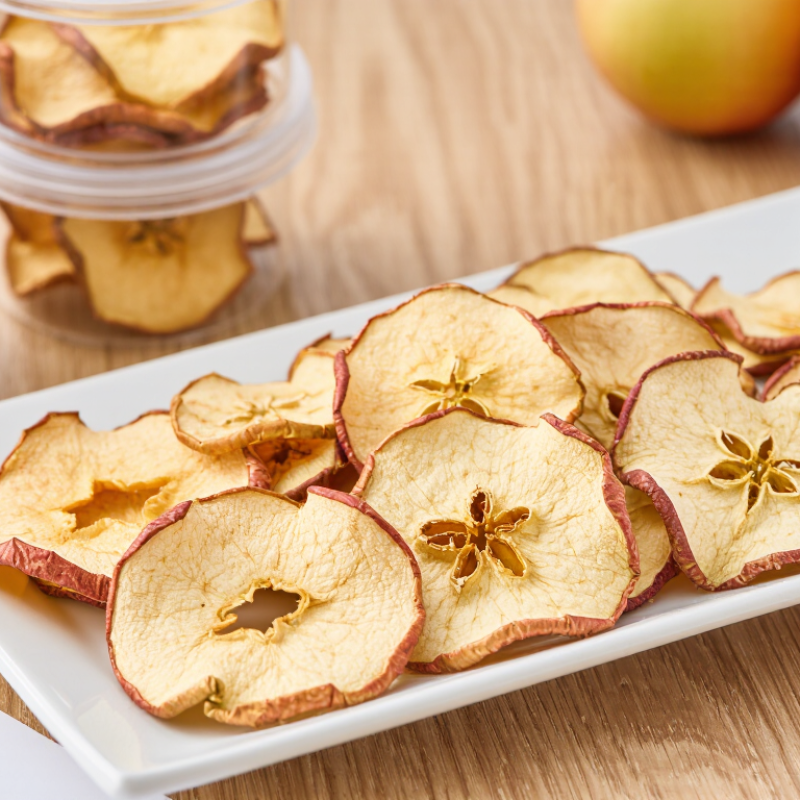
U100 dried apple usually describes a larger size grade, often fewer than 100 pieces per pound. However, the definition is not universal. Exporters may calculate size by weight, slice count, or production line standards. Global buyers should request a written specification before comparing offers. In practice, larger pieces create a fuller bite and stronger visual appeal in trail mixes, bakery fillings, and retail packs. They may also command a higher price because cutting losses can increase. The grade alone does not prove quality.

Trade data gives useful context. FAOSTAT recorded global apple production above 95 million tonnes in 2022, creating a substantial raw-material base for processing. The International Nut and Dried Fruit Council’s statistical reports also show dried fruit remains an internationally traded category, although volumes vary with harvests, freight costs, and energy prices. U100 sourcing therefore involves more than selecting attractive slices. Buyers should examine moisture, water activity, color, texture, microbiological results, packaging performance, and pesticide compliance for the destination market. A low moisture result can still hide uneven texture. This is where supplier experience matters.

Tips: Ask for a recent lot sample, product photos, sieve or count records, and a certificate of analysis. Confirm whether “U100” means pieces per pound or another local grade. Check the production date and storage conditions. A small pilot order is wiser than a confident assumption. Data helps, but inspection remains essential.

Why Choose U100 Dried Apple for Global Sourcing? – What U100 Dried Apple Means in Global Trade

Data Dimension U100 Dried Apple Trade Interpretation Typical Commercial Benchmark Why It Matters for Global Sourcing
Meaning of “U100” A commercial size or quality code used by a buyer or supplier for a relatively large, uniform dried-apple specification. Not a universally harmonized legal grade; the exact definition must be stated in the purchase specification. A written definition prevents misunderstandings between exporters, importers, and distributors.
Product Form Usually supplied as apple rings, slices, chunks, or dices, depending on the buyer’s product application. The contract should specify cut type, thickness, diameter or piece size, and allowable breakage. Consistent cuts improve portion control, visual presentation, and processing efficiency.
Size Uniformity U100 generally signals a preference for controlled and relatively uniform sizing rather than mixed small fragments. A practical specification may include a defined size range and a maximum percentage of undersized pieces. Uniformity supports stable packing density, predictable rehydration, and consistent retail appearance.
Moisture Content A key quality and shelf-life indicator for dried apple. Many commercial dried-fruit specifications target approximately 15%–25% moisture, subject to cut, process, and contract requirements. Moisture affects texture, microbial stability, weight yield, and freight economics.
Water Activity Used together with moisture content to evaluate storage stability. A water activity below 0.60 is commonly associated with improved control of microbial growth, but the finished product must be validated by testing. Helps reduce the risk of mold growth, fermentation, and quality deterioration during international transit.
Color and Appearance May be natural cream to light brown or treated to retain a lighter color, depending on processing. Specify acceptable color range, absence of excessive browning, and limits for foreign material and damaged pieces. Clear visual criteria reduce claims and make incoming inspection more objective.
Sulfur Dioxide Status The product may be sulfur-treated or unsulfured; “U100” alone does not define sulfite status. Declare sulfite use and verify residual sulfur dioxide against the destination market’s legal limit and labeling rules. Sulfite requirements vary by country and can affect labeling, allergen declarations, and customs compliance.
Food Safety Controls The U100 code describes a commercial grade, not a food-safety certification. Common verification areas include microbiological testing, pesticide residues, heavy metals, foreign materials, and mycotoxins where applicable. Documented testing supports importer approval and reduces border, recall, and rejection risks.
Ingredient Profile Can be supplied as 100% apple or with permitted processing aids, depending on the specification. The ingredient declaration should identify apple, preservatives, antioxidants, oils, or other processing aids when used. Accurate ingredient information is essential for clean-label claims and regulatory documentation.
Packaging Options Commonly packed in food-grade inner bags with cartons, sacks, or larger bulk formats. The purchase order should state net weight, packaging material, pallet configuration, lot coding, and storage instructions. Suitable packaging protects the product from moisture, oxygen, odor transfer, and physical damage.
Shelf-Life Expectation Shelf life depends on moisture, water activity, treatment, packaging, and storage conditions. Commercial shelf-life claims commonly range from approximately 12 to 24 months when properly packed and stored, subject to validation. Longer validated shelf life can simplify inventory planning and international distribution.
Storage Conditions Requires protection from heat, humidity, direct sunlight, pests, and strong odors. Store in a cool, dry, clean environment and follow the validated product specification; avoid temperature and humidity abuse. Good storage practice preserves texture, color, flavor, and microbiological quality.
Best-Fit Applications Suitable for snack mixes, breakfast cereals, bakery products, confectionery, foodservice, and ingredient manufacturing. Select ring, slice, chunk, or diced formats according to the finished-product process. A defined U100 specification helps buyers match raw-material size with production equipment and end-use requirements.
Documents for Import The grade code should appear alongside a full product specification rather than being used as the only product description. Typical documents include commercial invoice, packing list, certificate of analysis, lot traceability records, and any required health or origin documents. Complete documentation supports customs clearance, quality approval, and supply-chain traceability.

Note: “U100” is a commercial designation rather than a single globally standardized legal grade. Buyers should confirm the supplier’s exact definition, test methods, tolerances, treatment status, and destination-market requirements before contracting.

How U100 Dried Apple Is Produced and Graded

Why Choose U100 Dried Apple for Global Sourcing?

U100 dried apple starts with careful fruit selection. Suppliers inspect firmness, maturity, color, and visible damage before processing. Clean apples are washed, sorted, and trimmed by trained workers. Cores and unwanted sections are removed. The slices should look even, not careless. Controlled slicing helps improve drying consistency and packing efficiency. Some processors use approved anti-browning methods, depending on market requirements and customer specifications.

Drying Is the Critical Stage Warm air removes moisture gradually without scorching the fruit. Operators monitor temperature, drying time, moisture content, and water activity. These details affect texture, shelf life, and shipping stability. The finished slices are cooled before inspection. Metal detection and hygienic handling support safer production. Real factories still face variation. Weather changes can affect raw fruit quality.

Grading and Sourcing Standards Grading usually considers slice size, color, moisture, texture, broken pieces, and foreign material. U100 is not a universal legal grade. In many sourcing programs, it describes a defined quality specification or uniformity target. Buyers should request written limits, test reports, product samples, and batch records. A bright color alone proves little. I have seen attractive samples soften during storage when moisture control was weak. Reliable sourcing requires checking performance after transport, not only appearance before shipment. Clear specifications make supplier comparisons more practical.

Key Quality Standards for U100 Dried Apple

Why Choose U100 Dried Apple for Global Sourcing?

Key Quality Standards for U100 Dried Apple

Global apple supply is substantial. The USDA Foreign Agricultural Service forecasts about 83 million metric tons of apples worldwide in 2024/25. Yet fresh volume does not guarantee consistent dried fruit quality. U100 needs a clear contractual definition. It may describe piece count, particle size, or a supplier-specific grade. Buyers should specify dimensions, slice thickness, color, and acceptable breakage before sampling. Ambiguous grading creates avoidable disputes.

Moisture and water activity deserve close attention. Many commercial buyers set moisture targets around 12–18%, but the test method must be recorded. A water activity target near 0.60 can help limit microbial growth, subject to product validation. Codex CXS 193-1995 supports control of contaminants, while CXC 1-1969 emphasizes hygienic processing and traceability. Each lot should include laboratory results for moisture, water activity, sulfites, pesticide residues, yeast, mold, and foreign matter.

The EU pesticide database and applicable importing-country limits should guide residue testing. A clean certificate is useful, not sufficient. Physical inspection still matters. Darkened edges, leathery centers, or uneven slices often reveal poor drying control. I would also request retained samples and batch records. That step is sometimes skipped, and it weakens later investigations.

Why U100 Dried Apple Supports International Sourcing

Why Choose U100 Dried Apple for Global Sourcing?

U100 dried apple can support international sourcing when the specification is clearly defined. The term should not be assumed to mean the same thing everywhere. Buyers should confirm grade, slice size, moisture level, color, and permitted processing methods with each supplier. In practice, consistent pieces make packing lines smoother and reduce unexpected sorting work. A clean apple aroma also helps quality teams identify storage problems early. That detail matters during long ocean shipments.

For overseas buyers, reliable documentation is as important as the fruit itself. Request product specifications, recent laboratory results, allergen statements, origin details, and traceability records. Check water activity and packaging performance, especially in humid climates. Samples should be tested after storage, not only on arrival. I have seen attractive samples lose texture when packaging was poorly selected. That is a useful warning, even when the initial quotation looks competitive. U100 sourcing works best with written standards, realistic lead times, and regular communication.

Tips: Compare at least two production samples. Ask how U100 is measured. Confirm carton weight and inner-bag protection. Keep a retained sample for future checks. Do not rely on photographs alone. A small inspection cost can prevent a larger shipment dispute. Suppliers may also interpret color tolerance differently, so agree on visual references before ordering. Mistakes still happen, and a clear correction process is worth preparing.

How to Evaluate U100 Dried Apple Suppliers

Why Choose U100 Dried Apple for Global Sourcing?

How to Evaluate U100 Dried Apple Suppliers

U100 dried apple can support consistent portioning, packing, and retail presentation. However, U100 is not a universal grade. Confirm whether it means fewer than 100 pieces per pound, a specific slice count, or a supplier-defined size. This detail matters. Written specifications should state variety, cut, moisture, water activity, color, and sulfur dioxide limits. A sample must match the specification, not merely look attractive.

FAOSTAT recorded roughly 95 million tonnes of global apple production in 2022. That scale offers sourcing flexibility, but raw material availability still changes by crop region and season. Ask suppliers for harvest origin, processing dates, storage conditions, and traceability records. During an audit, inspect cleanable surfaces, foreign-material controls, pest prevention, and worker hygiene. Codex General Principles of Food Hygiene recommends a preventive, hazard-based food safety system. Valid HACCP records should support that claim.

Request recent laboratory reports for Salmonella, yeast and mold, moisture, water activity, pesticide residues, and heavy metals. Results should come from competent laboratories using recognized methods. Check whether certificates cover the actual production site. A certificate alone is weak evidence. I would also compare three consecutive lots, because one perfect sample can mislead. Packaging deserves attention: verify oxygen protection, seal strength, carton durability, and transport temperature records. Small gaps remain possible, especially when translated specifications hide different testing methods.

Why Choose U100 Dried Apple for Global Sourcing?

How to Evaluate U100 Dried Apple Suppliers

The scorecard uses practical procurement priorities: food safety and regulatory compliance, consistent U100 sizing, moisture and water-activity control, traceability, packaging integrity, and supply reliability. Buyers should confirm destination-country limits and product specifications through current certificates, laboratory reports, and pre-shipment inspections.

Article Source: