20% off Demo Text

How to Choose the Best Desk Lamps for Your Office?

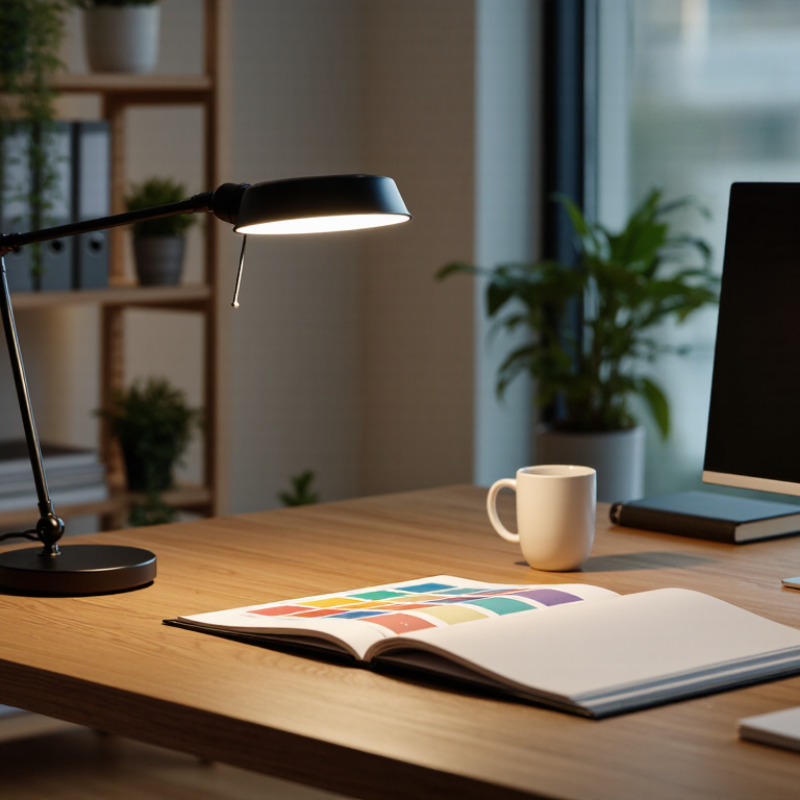
Choosing the best Desk Lamps for your office begins with understanding how light affects real work. A lamp should illuminate your documents without creating harsh reflections on your monitor. It should also reduce dark corners around the desk, where your eyes repeatedly adjust.

Professor Russell Foster, an Oxford lighting and circadian-rhythm expert, has described light as “the most powerful synchronizer of the human body clock.” His observation gives desk lighting a wider purpose. Bright, well-timed light can support alertness, while excessive glare may cause discomfort and distraction.

Look for Desk Lamps with adjustable brightness, flexible arms, and stable bases. A warm setting can feel comfortable during evening reading. A cooler setting may suit detailed tasks during daytime hours. However, color temperature alone does not guarantee comfort. The lamp’s position matters just as much. Place it opposite your writing hand to limit shadows. Keep the light source slightly above eye level.

Check the color rendering index when accurate color matters. A high CRI can make printed charts and design samples appear more natural. A dimmable model is usually more practical than a bright lamp with one fixed setting.

Not every expensive lamp performs better. Some beautiful designs create glare. Some compact models leave half the desk poorly lit. Personal comfort still requires testing. Sit at your desk. Read for ten minutes. Notice eye strain, reflections, and shadows.

The right choice is not merely stylish. It should make focused work feel quieter, clearer, and less tiring. Yet lighting preferences differ, so even expert guidance needs thoughtful adjustment.

How to Choose the Best Desk Lamps for Your Office?

Desk Lamp Types and Their Workplace Uses

How to Choose the Best Desk Lamps for Your Office?

Desk Lamp Types and Their Workplace Uses

The right desk lamp depends on the work, not only the desk size. An adjustable task lamp suits reading, writing, and detailed paperwork. Its movable arm can place light beside your keyboard without creating harsh screen glare. A clamp lamp saves space on narrow desks and works well beside shelves or shared workstations. I have found that flexible positioning matters more than decorative design.

A banker-style lamp offers broad, comfortable light for documents and meeting notes. It looks pleasant, but its fixed shade may limit adjustment. A daylight lamp can help with color-sensitive tasks, such as sketching or reviewing printed images. However, very bright light may feel tiring during long computer sessions. I once chose brightness over comfort and regretted it by afternoon. That was a useful mistake.

Tips

Check the lamp from your normal sitting position. The shade should cover the bulb and keep light away from your eyes. Choose adjustable brightness for changing tasks and daylight conditions. Look for a stable base, especially on crowded desks. Warm light can feel calmer, while neutral light often supports focused office work. Test the switch before buying. Small controls become annoying quickly.

How to Choose the Best Desk Lamps for Your Office? - Desk Lamp Types and Their Workplace Uses

Desk Lamp Type Best Workplace Use Key Features Recommended Light Characteristics Main Advantages Potential Limitations
Adjustable Arm Lamp Reading documents, drafting, design work, and focused computer tasks Pivoting head, articulated arm, adjustable height and reach Directional light with adjustable brightness; a neutral white setting around 3500–4500 K is suitable for many office tasks Places light precisely where it is needed and helps reduce shadows on work materials Moving parts may loosen over time; the base needs sufficient desk space
Gooseneck Lamp General computer work, reception desks, and compact workstations Flexible neck, compact footprint, easy angle adjustment Soft, diffused illumination with dimming for different tasks and times of day Simple to reposition and suitable for desks with limited space The neck may gradually sag if it is frequently repositioned or heavily loaded
Architect or Drafting Lamp Technical drawing, architecture, engineering, crafting, and detailed visual work Long articulated arms, broad movement range, stable weighted or clamp base High, even task illumination with good color rendering; a color rendering index of 80 or higher is generally suitable for office work Covers a large work area and supports accurate visual inspection Usually larger, heavier, and more visually prominent than standard desk lamps
Clamp-On Lamp Small desks, shared workstations, shelving areas, and temporary workspaces Clamp mount, flexible positioning, minimal use of desk surface Adjustable directional output with glare control and a secure mounting mechanism Saves desk space and can be moved without rearranging the whole workstation Requires a compatible desk edge and may not work well with thick or fragile surfaces
Monitor Light Bar Computer-focused work where desk space is limited Mounts on top of a monitor, illuminates the desk without occupying the work surface Broad, downward-directed light with low screen reflection and adjustable brightness Keeps the desk clear and can provide more balanced brightness around the screen Compatibility depends on monitor thickness, shape, and camera placement
Banker-Style Lamp Traditional offices, document review, reception areas, and reading stations Wide horizontal shade, fixed or slightly adjustable light direction, stable base Broad, comfortable illumination for paper-based tasks with a matte or diffusing shade Provides a classic appearance and broad coverage for documents Offers less directional flexibility and may take up more desk area
Touch-Control LED Lamp Flexible home-office and shared-office environments Touch controls, multiple brightness levels, compact LED light source Dimmable output and selectable color temperature, such as warm, neutral, and cool settings Easy to operate and typically generates less heat than traditional incandescent lamps Touch controls can be activated accidentally; built-in LEDs may be difficult to replace
Magnifying Desk Lamp Small-part inspection, electronics work, model making, and precision crafts Magnifying lens, adjustable arm, integrated task illumination Even, shadow-reducing light with a color rendering index of 80 or higher for clearer detail Combines magnification and lighting in one workstation tool The lens adds weight and can reduce the lamp's usefulness for ordinary desk work

Selection note: Choose a lamp with adjustable brightness, controlled glare, stable support, and a light direction that does not reflect directly into the eyes or onto the computer screen. LED lamps are commonly preferred for office use because they are generally energy-efficient and produce relatively little heat.

Key Lighting Features for Office Tasks

How to Choose the Best Desk Lamps for Your Office?

Key Lighting Features for Office Tasks

A good desk lamp should make printed text and screen details easier to see without creating glare. For office tasks, choose adjustable brightness rather than one fixed setting. Around 500 to 1,000 lumens often suits a typical desk, but room lighting changes the result. A lamp with a color temperature near 3,000 to 4,000 Kelvin can feel comfortable during long reading sessions. Cooler light may help alertness, though it can feel harsh at night.

Check the color rendering index, or CRI, when reviewing specifications. A CRI of 80 or higher usually shows documents and colored charts more naturally. Higher values can help with design work and detailed paperwork. Flicker is harder to judge from a product page. In practice, record a slow-motion phone video of the lamp. Moving dark bands may suggest visible flicker. This test is useful, but not perfect.

Position matters as much as the lamp itself. Place the light opposite your writing hand to reduce shadows. Keep the shade below eye level, and aim the beam toward the task area, not directly at the monitor. A wide, diffused shade can soften bright spots. I once chose a powerful lamp that looked impressive but caused screen reflections. It was too bright for the small desk. That mistake changed my preference toward adjustable arms, stable bases, and simple controls. Some lamps still lack clear specifications, so test comfort over several work sessions before deciding.

How to Match Lamp Size, Brightness, and Color Temperature

Choosing a desk lamp starts with your actual desk, not a product photo. A narrow lamp suits a 100-centimeter desk, while a wide shade can crowd notebooks and monitors. Measure the working surface before shopping. Leave roughly 30 centimeters between the lamp base and your keyboard. This small gap reduces collisions during daily use. I once chose a beautiful lamp with a short arm. It looked efficient, but its light missed the drawing area. That mistake still influences my measurements.

Brightness should match the task and the room. For reading, writing, or detailed craft work, aim for adjustable output around 500 to 1,000 lumens. A dimmer setting matters because bright paper can cause glare after sunset. Keep the shade slightly above eye level, and direct light across the page rather than into your eyes. If the screen reflects a white patch, rotate the lamp or move it sideways. Light-colored walls may make a room feel brighter, so fixed numbers are not absolute. Recommendations can sound too certain.

Color temperature affects comfort more than many buyers expect. A range near 3500K to 4500K usually creates a clear, neutral working atmosphere. Warmer light near 2700K can feel calmer, though it may make fine details appear less crisp. Cooler settings can support alertness, but excessive blue-white light may feel harsh late at night. Choose a lamp with smooth adjustment if your schedule changes. Test it with your actual paper, skin tone, and screen. Personal comfort is difficult to measure.

How to Choose the Best Desk Lamps for Your Office?

Match the lamp size, brightness, and color temperature to your desk and working habits.

Compact lamps suit smaller workspaces, while standard and wide lamps provide broader light coverage for larger desks. A brightness range of approximately 450–1,200 lumens is suitable for common office task lighting. Warm-neutral light around 3,000K–4,000K is comfortable for reading and general office work, while 5,000K can provide a cooler, more alert appearance.

Lamp Size Recommended Desk Area Brightness Color Temperature
Compact: 25–35 cm reach Small desks up to 100 cm wide 450 lumens 3,000K
Standard: 35–50 cm reach Desks around 120–150 cm wide 800 lumens 4,000K
Wide: 50–65 cm reach Large desks over 150 cm wide 1,200 lumens 5,000K

Ergonomic Placement and Eye Comfort Considerations

Choosing a desk lamp starts with placement, not brightness. Set it beside your non-writing hand, slightly behind your shoulder. This reduces shadows across the page. Keep the light source below eye level. A visible bare bulb can create distracting glare.

The EN 12464-1 workplace-lighting standard specifies about 500 lux for reading, writing, and data-processing tasks. However, brighter is not always better. The IES Lighting Handbook commonly supports layered office lighting around 300–500 lux.

Use a dimmable lamp and adjust it during the day. Aim the beam at documents, not directly at your monitor. Your screen should remain readable without a bright reflection.

Eye comfort also depends on breaks and contrast. The American Optometric Association recommends the 20-20-20 approach: every 20 minutes, look 20 feet away for 20 seconds. Place the monitor about an arm’s length away, with its top near eye level.

I have found that warm, even light feels calmer during evening work, though personal comfort differs. That detail is easy to overlook. A lamp that feels comfortable for ten minutes may still cause fatigue after three hours.

Test it with real paperwork, video calls, and screen work before deciding. I would not trust specifications alone.

Safety, Energy Efficiency, and Long-Term Value

A good office desk lamp should reduce glare, not merely brighten the keyboard. Look for a stable base, insulated housing, enclosed wiring, and a shade that blocks direct light. Products tested to electrical-safety standards, such as IEC 60598-1, offer stronger evidence than vague “safe” claims. Check the lamp’s heat after two hours. It should remain comfortable to touch. Never ignore flickering or a loose plug. Small defects can become expensive risks.

Energy efficiency changes the buying calculation. The U.S. Department of Energy reports that LED lighting uses up to 75% less energy and lasts up to 25 times longer than incandescent lighting. A 10-watt LED used eight hours daily consumes about 29.2 kilowatt-hours yearly. Compare this figure with useful light output, measured in lumens, rather than watts alone. The International Energy Agency identifies lighting as a major electricity end use worldwide, so modest savings can scale across offices. Dimming helps, but only when the control works smoothly. Cheap dimmers may reduce comfort.

Long-term value includes warranty terms, color stability, and replaceable parts. A high color-rendering index helps documents and skin tones appear more natural. There is an imperfect trade-off: advanced controls may save energy, yet they add failure points. Test the switch, hinge, and cable before purchase. Ask whether the light remains steady at its lowest setting. The cheapest lamp can win today and lose after repeated replacements.